
We Are the ISA Certified Arborists for
Vertical Mulching
Healthy Soil = Healthy Trees
How Does Vertical Mulching Help?
North Texas is known for its expansive clay and loamy Blackland Prairie soils. Because this soil is so heavy, it packs down easily, drains slowly, and doesn’t hold onto nutrients well.
Compacted or poorly draining soil can severely restrict a tree’s access to oxygen, water, and essential nutrients. Vertical mulching is a specialized soil-improvement treatment designed to relieve soil compaction and promote a healthy environment for the root zone over time.
Unlike surface mulching, vertical mulching addresses soil health beneath the surface throughout the trees root zone from trunk to dripline.
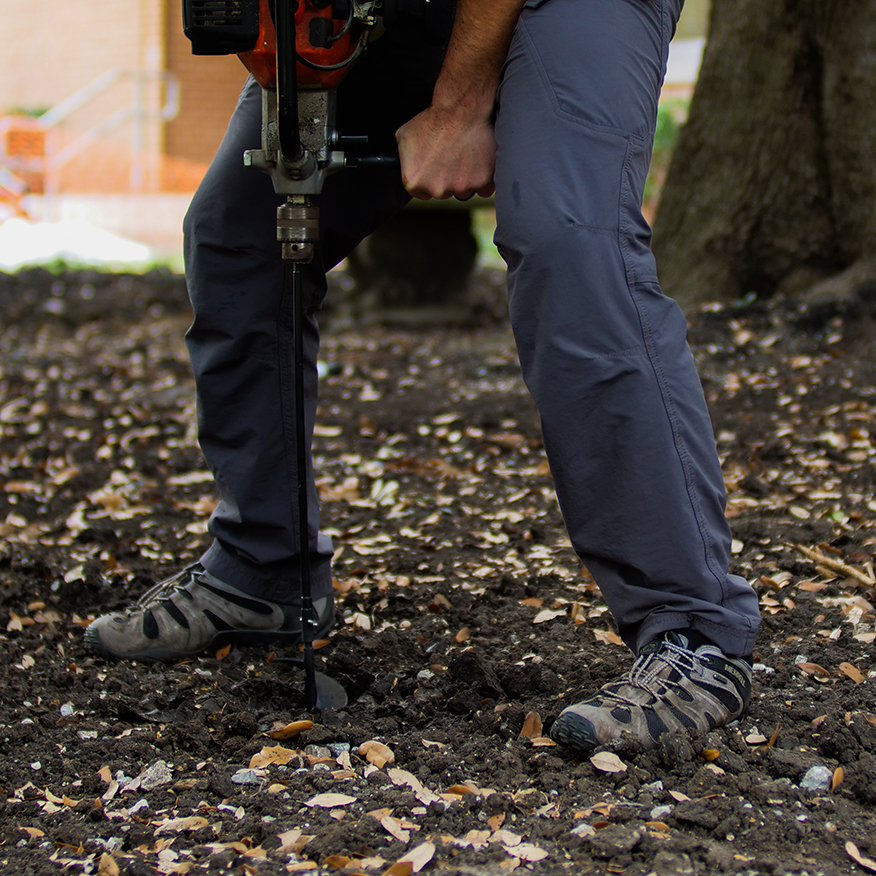
- Grid Aeration: series of uniform holes drilled into the soil using an air spade or auger within the root zone.
- Soil Amendment Blending: the holes are backfilled with a custom blend of porous aggregates (pea gravel) and organic amendments (compost or mulch), tailored specifically to the sites soil compaction and drainage level.
- Root Expansion: the newly created spaces allow air and water to move and penetrate within the root zone, encouraging fine-root growth and improving overall soil environment.
Key Benefits of Vertical Mulching
- Relieves soil compaction by breaking up tight, high-density soil caused by foot traffic, heavy construction equipment, and natural settling.
- Improves water infiltration and aeration within the critical root zone by increasing poor space.
- Creates an oxygen-rich and well-draining environment that helps mitigate conditions favored by root rot pathogens like Phytophthora root rot.
- Works as a long-term soil treatment and aids in recovery
Vertical mulching is ideal for stressed trees showing signs of canopy decline, trees in high-traffic or post-construction areas, and soils with poor drainage.
Effects of Poor Drainage and Compaction
- Reduced tip growth
- Reduced leaf size
- Poor canopy color
- Dieback
- Tree or plant system failure
- Chronic stress
- Slower/Shallow root system growth
- Increased susceptibility to insects and diseases
- Phytophthora root rot
Let Texas Tree Surgeons Help
A Texas Tree Surgeons Certified Arborist can assess your property for tree care issues including compaction and recommend a course of action to remedy the issues. Diagnosing issues in tree health involves an understanding of local soil types, property information related to activities affecting the soils, as well as a thorough knowledge of tree types and common issues.
Visual Documentation
Vertical Mulching
View Photos of Vertical Mulching Installed by our ISA Certified Arborists & Tree Health Care Technicians
IMPROVE ROOT HEALTH AND COMBAT SOIL COMPACTION
Soil found in North Texas can be unforgiving. In our urban neighborhoods our soil becomes compacted due to construction traffic, heavy lawn mowers, foot traffic, and the natural characteristics of clay. Vertical mulching combats this by creating direct pathways to the roots.

WHAT IS VERTICAL MULCHING?
Vertical mulching is a targeted, deep-tier aeration system designed specifically for a tree’s root infrastructure.
By removing compressed soil from these vertical columns and replacing it with high-quality organic matter helps nutrients, air, and water mover right past the lawn and deep into the root zone.

MAPPING THE CRITICAL ROOT ZONE
We map out a radial grid pattern starting roughly 3 to 8 feet away from the trunk (avoiding the large structural anchor roots) and extending out to the tree’s dripline.

PNEUMATIC EXCAVACTION OR DRILLING
Using specialized tools—such as a high-velocity AirSpade or an auger drill—we create precise holes roughly 2 to 4 inches wide and 8 to 18 inches deep.
BACKFILLING WITH POROUS ORGANIC MATERIAL
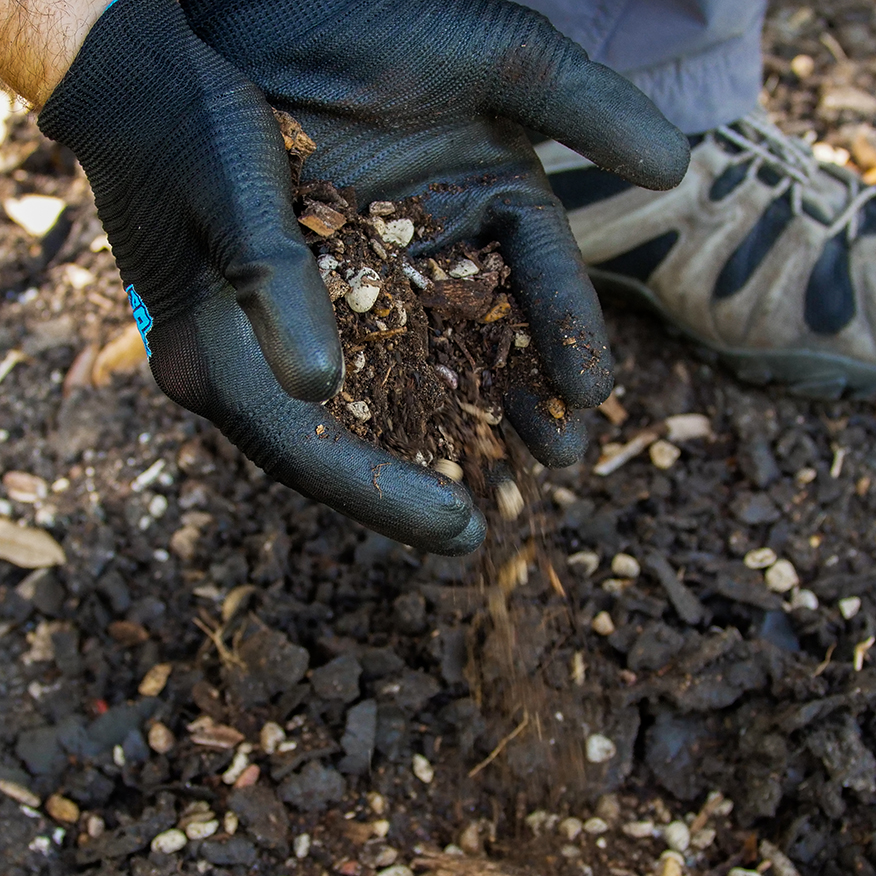
The compacted clay is removed from the dug out columns and replaced with a porous, premium blend of organic compost, aged mulch, and sometimes liquid macro-nutrients.

BENEFITS OF VERTICAL MULCHING
By swapping out columns of dense clay for highly porous organic material oxygen is reintroduced straight to the subterranean level. The vertical mulch columns act like subterranean funnels directing water deep into the subsoil and conversely, during abnormally wet periods, improve drainage.
Tree roots naturally seek out paths of least resistance and high nutrient density. Within a couple of seasons, thousands of new, microscopic feeder roots will snake directly into these organic columns, rapidly improving the tree’s overall structural vigor and drought tolerance.
Contact Us
Get Your Estimate Today!
Ready to get started? Have a question? We’d love to hear from you. Request an estimate and get started today.
Contact Us
Testimonials
We Love Trees and Happy Customers
Honest Reviews from Satisfied Customers
1500+ verified reviews


Locations