The Problem with Gator Bags
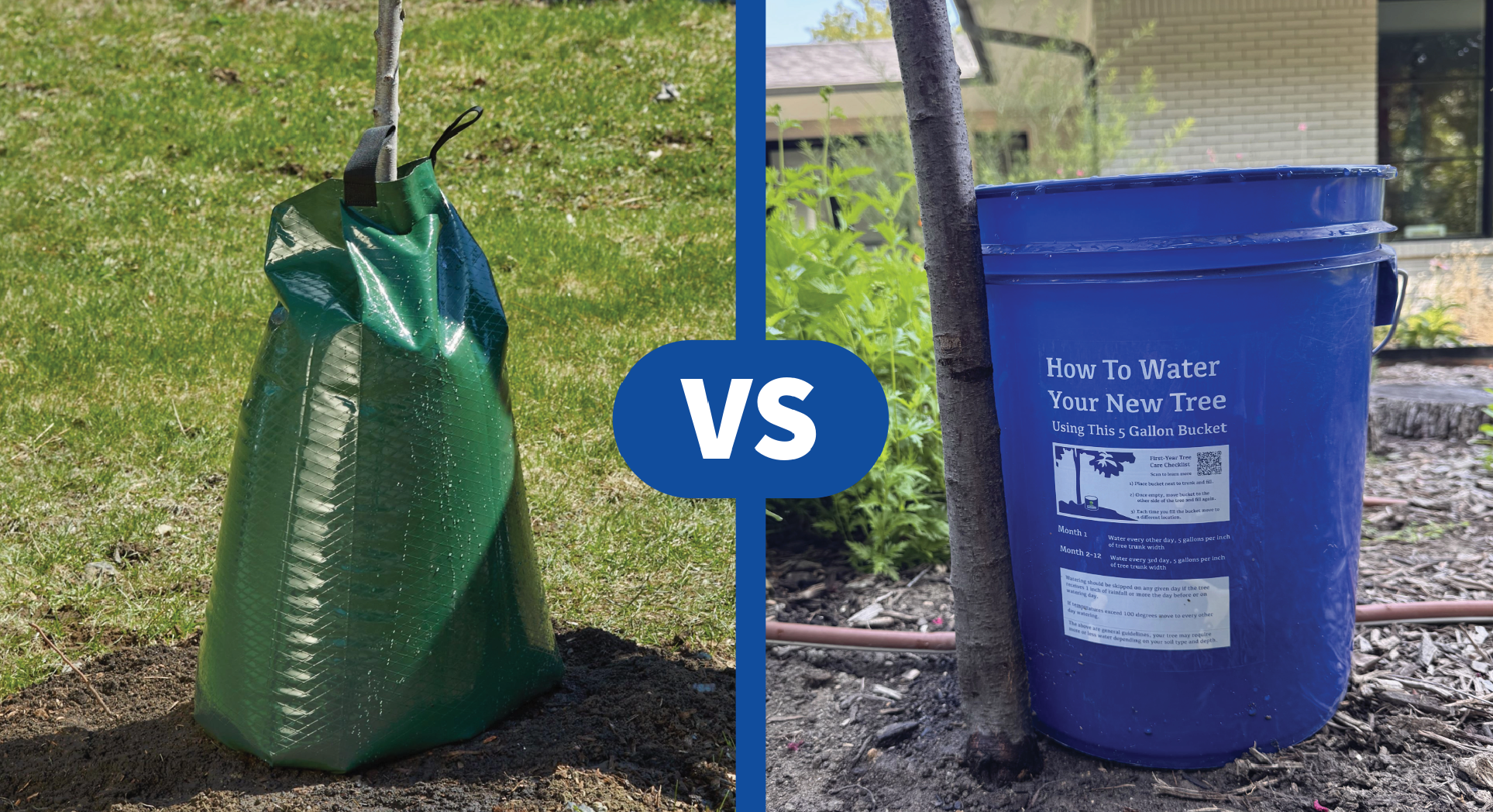
Using gators on newly planted trees can be an easy way to ensure they receive adequate water during their critical growing phase. However, if not used correctly, these helpful devices can lead to more harm than good. We do not recommend the use of gators / water bags on trees but we do recommend and supply a 5-gallon bucket (with small drilled holes) to use.
If you are looking for detailed watering information, please read this blog, Current Tree Watering Guidelines for North Texas.
Issues with Overfilling the Gator
It might seem like a good idea to fill the gator to the brim to avoid frequent refills, but overfilling can lead to root rot and other moisture-related issues. When water seeps into the soil excessively, the oxygen needed by roots is replaced by water, creating an environment where fungi can thrive. This condition is particularly risky for young trees whose roots are still developing. Conditions are also exacerbated by Texas clay-heavy soil types which have higher water retention and smaller soil pores, meaning soil oxygen is already limited. It’s best to follow the manufacturer’s instructions closely to ensure the proper amount of water is being delivered to your trees.
Incorrectly Using a Gator During Inclement Weather
Gators are most effective in climates with consistent temperatures. When temperatures are very hot or extremely cold the water held in the gator can either overheat or chill the roots. During summer, the water inside the gator can become too warm, damaging the delicate roots of young trees. Conversely, in colder climates, the water is at risk of freezing, rendering the gator ineffective. Trees in these conditions might benefit more from a mulching practice that insulates roots and conserves moisture without the risk of freezing. For this reason, you should assess the climate of your region carefully and consider using alternative watering techniques and routines when necessary for the best results.
Ignoring Tree Growth Changes When Using a Gator
As trees grow, they require different amounts of water. Continuously using the same gator settings can lead to underwatering or overwatering. Newly planted trees have smaller root systems and need less water, but as they mature, their water needs increase. Regularly monitoring your trees and adjusting gator usage accordingly is crucial. This might involve changing the size of the gator, adding two or more, or switching to a different watering method as your tree transitions from a sapling to a more mature state.
Leaving Gator on for Too Long
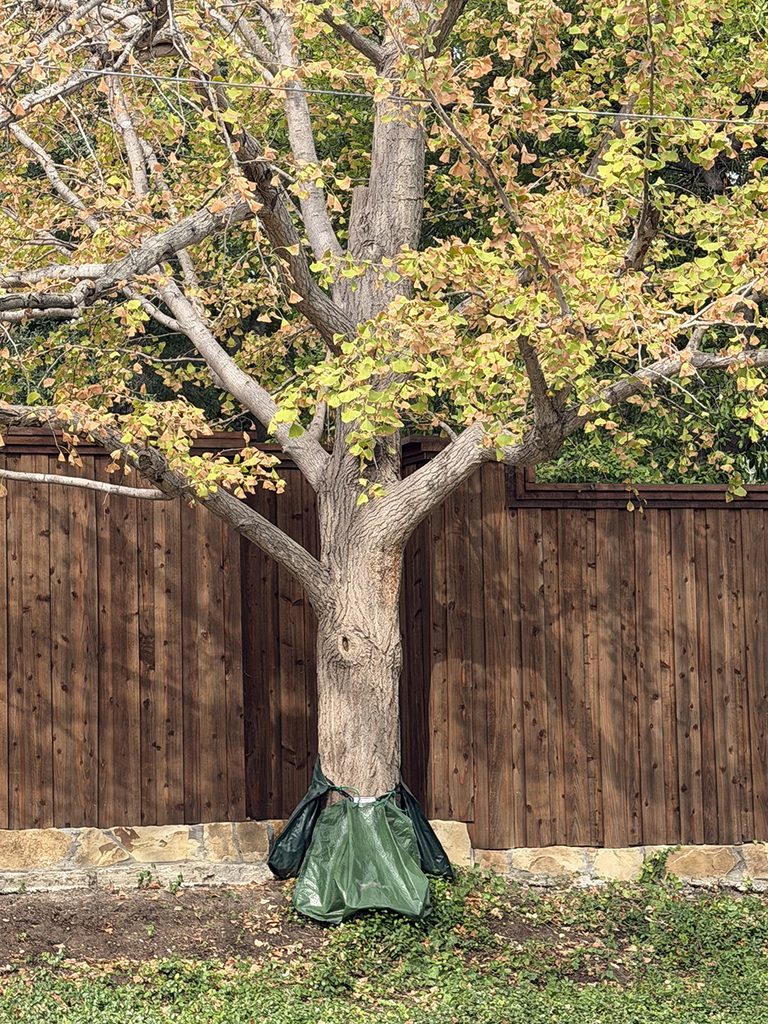
While gators are convenient, leaving them on for extended periods without checking the tree’s trunk and root system can lead to problems. This continuous water delivery can saturate the soil, exclude necessary air, and suffocate the roots. Plastic held tightly against the trunk can girdle the tree and interfere with respiration activity in the cambium of the tree. In addition, the narrow space between the gator bag and the tree’s trunk frequently becomes a home for ants. Ant activity and mound formation on the trunk/root zone can further harm the tree and clog the gator bag’s drainage holes rendering it useless. It’s important to remove them once the reservoir empties or when the tree no longer needs supplemental watering. Especially after heavy rainfall, assess whether additional watering from the gator is necessary.
A smart strategy is to develop a schedule for routinely checking the water levels and adjusting as needed based on weather conditions and the growing season. Installing a soil moisture meter can help you gauge the soil’s saturation level accurately. This tool ensures you’re providing just the right amount of water your tree requires, keeping it healthy and thriving without unnecessary water usage.
Neglecting Maintenance of the Gator Bag
Over time, gators can develop leaks or blockages that affect their efficiency. Unchecked, these minor issues can evolve into significant problems, leading to inconsistent irrigation. Regularly inspect and maintain your gators to ensure they are functioning properly. Start by checking for any visible damage or debris accumulation at least once a month. If the bag is leaking, water may run off of the site and the gator needs to be replaced. If the bag is blocked, rinse the gator bag of accumulated debris (soil, leaves, insects, etc.) and drain as much as possible from the small hole in the top. This will help keep your trees healthy and your water usage efficient.


Recommended Method for Watering Young Trees
Consistency is key with helping a new tree establish healthy roots. Use the 5-gallon bucket provided during tree planting. This bucket has holes drilled into the bottom to make sure water can slowly and deeply soak into the soil around your young tree. This provides more even water distribution than the gator, and is simpler to clean and maintain. You want the soil to feel moist 12- 18 inches deep. You can test by sticking a screw driver or similar tool to see moisture levels, similarly to how one tests the doneness of a cake. If the screwdriver can slide into the soil, it is moist enough. If it is difficult, that area needs more water. Move the bucket and refill it to make sure water is evenly distributed around the entire root zone.
- First 4–5 Weeks: Water every 3–5 days to keep the soil around the root ball consistently moist but not soggy. This helps the tree settle in after planting.
- Spring & Fall: Shift to a deep soak once or twice per week, depending on rainfall. Cooler weather reduces stress, but trees are still actively growing roots.
- Summer: The toughest season for young trees. In hot Texas summers, you may need to water every other day, especially in sandy soils that dry out quickly. Clay soils hold more moisture, be sure to check regularly. Signs of stress include wilting leaves, browning edges, or early leaf drop.
- Winter: Even when dormant, trees need water. Provide a deep soak every 2–3 weeks if rainfall is lacking, with special attention to evergreens that continue losing moisture year-round.
Deep watering is critical. A long, slow soak allows water to penetrate the soil deeply, reaching the roots that will anchor the tree and support its growth for years to come. Shallow, frequent watering only wets the top layer of soil, which encourages weak, shallow roots that are more vulnerable to drought and wind.
General Guidelines: Give about 10–15 gallons per inch of trunk diameter per week, spread out over one or two deep soakings rather than daily splashes.
 PREV BLOG
Related Blogs
Similar blogs related to this topic


How to Make Sure Your New Tree Establishes and Survives the First 5 Years
Properly planting a tree is just the beginning. The immediate years following planting are often the toughest. Newly planted trees are most susceptible to extreme environmental and physiological stresses. Follow proper watering, mulching, and pruning…
Read more
Current Tree Watering Guidelines for Newly Planted Trees
Tree Watering for Newly Planted Trees Newly planted trees require consistent moisture while their root systems become established. North Texas heat, drought, and heavy clay soils can make this especially challenging. The schedule below is…
Read more
Current Tree Watering Guidelines for North Texas
Tree Watering for Newly Planted Trees Newly planted trees require consistent moisture while their root systems become established. North Texas heat, drought, and heavy clay soils can make this especially challenging. The schedule below is…
Read more