Current Tree Watering Guidelines for North Texas
Tree Watering for Newly Planted Trees
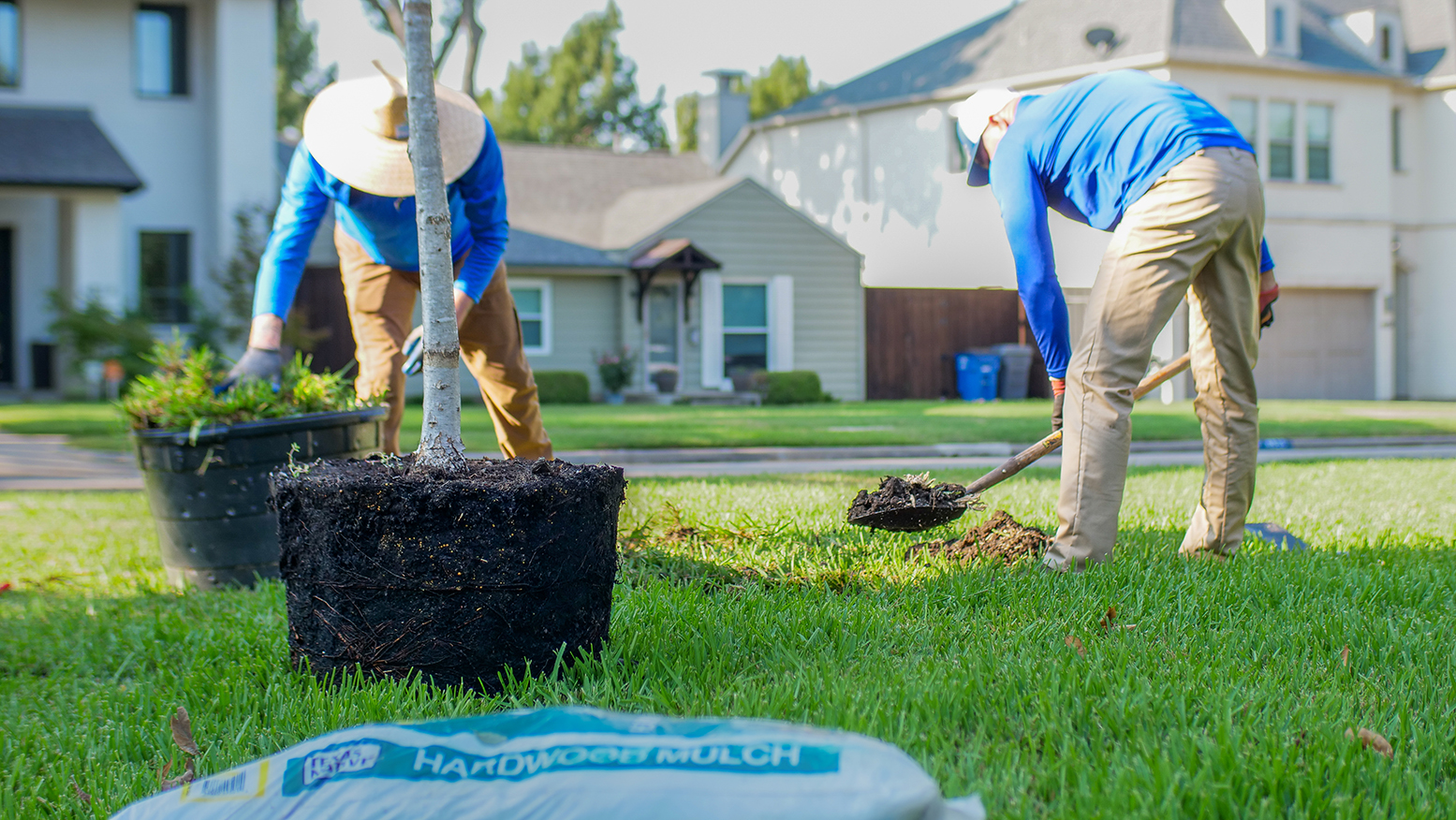
Newly planted trees require consistent moisture while their root systems become established. North Texas heat, drought, and heavy clay soils can make this especially challenging.
The schedule below is a general starting point. Always check soil moisture before watering and adjust based on rainfall, temperature, tree species, soil conditions, and time of year.
| Time After Planting | Recommended Watering |
|---|---|
| First 1–2 Weeks | Water daily or every other day, depending on weather and soil moisture. |
| Weeks 3–4 | Water approximately every 2–3 days. |
| Months 2–3 | Water approximately 2 times per week. |
| Months 4–6 | Water approximately once per week. |
| Months 7–12 | Water approximately every 7–14 days during dry periods. |
| Extreme Summer Heat | Monitor soil more frequently and provide supplemental water as needed. |
Adjusting for North Texas Conditions
North Texas commonly has dense clay soils that absorb water slowly. Water should be applied slowly and deeply to allow moisture to penetrate the root zone without creating runoff or saturated soil.
Before watering, check the soil several inches below the surface:
- Moist: Wait before watering.
- Beginning to dry: Water thoroughly.
- Very dry: Provide a slow, deep irrigation.
- Saturated: Do not water until the soil begins to dry.
During Extreme Summer Heat
New trees require extra attention during periods of extreme heat and drought. Do not rely solely on a fixed calendar schedule.
Check the soil frequently and provide additional irrigation when necessary. Newly planted trees can dry out much faster than established trees because their root systems are still developing.
Proper Watering Technique
Water slowly and deeply rather than quickly and frequently.
Apply water over the root ball and gradually expand the watering area as the tree establishes. Avoid directing large amounts of water against the trunk.
A 2–4 inch layer of organic mulch can help conserve moisture and reduce soil temperatures. Keep mulch several inches away from the trunk and root flare.
After the First Year
As the tree becomes established, gradually transition from frequent irrigation to deeper, less-frequent watering.
The goal is to encourage the tree to develop a healthy root system capable of utilizing moisture throughout the surrounding soil.
Remember: This schedule is a general guideline. Actual watering needs will vary based on tree species, tree size, planting location, soil conditions, irrigation system, rainfall, and weather.
Mature Tree Watering
Established trees have larger, more developed root systems and generally require less frequent watering than newly planted trees. The goal is to provide deep, slow irrigation during extended dry periods while allowing the soil to dry between watering events.
| Conditions | Recommended Watering |
|---|---|
| Spring – Normal Rainfall | Usually little to no supplemental watering is needed when regular rainfall is occurring. |
| Spring – Dry Conditions | Deep water approximately every 2–3 weeks, depending on soil moisture. |
| Early Summer | Monitor soil moisture and deep water approximately every 2–3 weeks when rainfall is limited. |
| Extreme Summer Heat | Deep water approximately every 2 weeks, while monitoring soil conditions closely. |
| Extended Drought | Deep water approximately every 1–2 weeks, depending on soil moisture and tree stress. |
| Fall – Normal Rainfall | Supplemental irrigation may not be necessary when adequate rainfall is occurring. |
| Fall – Dry Conditions | Deep water approximately every 2–4 weeks as needed. |
| After Significant Rainfall | Skip irrigation until the soil begins to dry. |
| Winter | Water only during extended dry periods when the ground is not frozen and soil moisture is low. |
How to Know When Your Tree Needs Water
Don’t rely solely on a calendar. Check the soil before watering.
- Moist soil: Wait before watering.
- Beginning to dry: Monitor closely and prepare to water.
- Dry several inches below the surface: Deep watering is recommended.
- Saturated or consistently wet soil: Do not water.
How to Water Mature Trees
Apply water slowly and evenly throughout the tree’s root zone.
Whenever possible:
- Water beneath the canopy and toward the drip line.
- Extend irrigation beyond the drip line where practical.
- Use soaker hoses, drip irrigation, or other low-volume irrigation methods.
- Avoid concentrating water directly against the trunk.
- Allow water to soak into the soil rather than running off the surface.
For North Texas clay soils, slow application is especially important because the soil can absorb water slowly and remain wet for extended periods.
During Extreme Summer Heat
During periods of prolonged extreme heat, trees may require supplemental irrigation even if they appear healthy.
Monitor trees for:
- Wilting or drooping foliage
- Premature leaf drop
- Smaller-than-normal leaves
- Thinning canopy
- Browning leaf margins
- Increased deadwood
These symptoms can have multiple causes. If symptoms persist despite adequate soil moisture, a professional tree evaluation may be appropriate.
Mulch Helps Conserve Water
Maintain approximately 2–3 inches of organic mulch over appropriate portions of the root zone.
Mulch helps:
- Reduce evaporation
- Moderate soil temperatures
- Reduce competition from turf and weeds
- Protect shallow roots
- Improve soil conditions over time
Keep mulch several inches away from the trunk and root flare.
North Texas Tree Care Rule
Established trees generally prefer deep, slow watering during extended dry periods rather than frequent, shallow irrigation.
Remember: Mature trees vary significantly in their water requirements. Tree species, canopy size, soil type, irrigation coverage, rainfall, exposure, and site conditions should all be considered when determining the appropriate watering schedule.
 PREV BLOG
 Related Blogs
Similar blogs related to this topic

Understanding the Long Term Benefits of Planting Younger / Smaller Caliper Trees
Planting trees requires various considerations, from soil quality to the choice of species. One factor that often goes under the radar is caliper size. There is less likelihood of complications with root health when planting…
Read more
How Does Soil Quality Affect Tree Planting in North Texas
North Texas is home to a variety of soil types, each impacting the growth and health of trees in different ways. Understanding these soil types can help in selecting the right trees for your landscape…
Read more
When is the Best Season to Plant Trees in Dallas?
Planting trees when temperature is more mild in Texas will bring about the best outcomes in tree establishment and health. Keep in mind summers have been extremely brutal so planting a tree in spring is…
Read more