Understanding the Long Term Benefits of Planting Younger / Smaller Caliper Trees
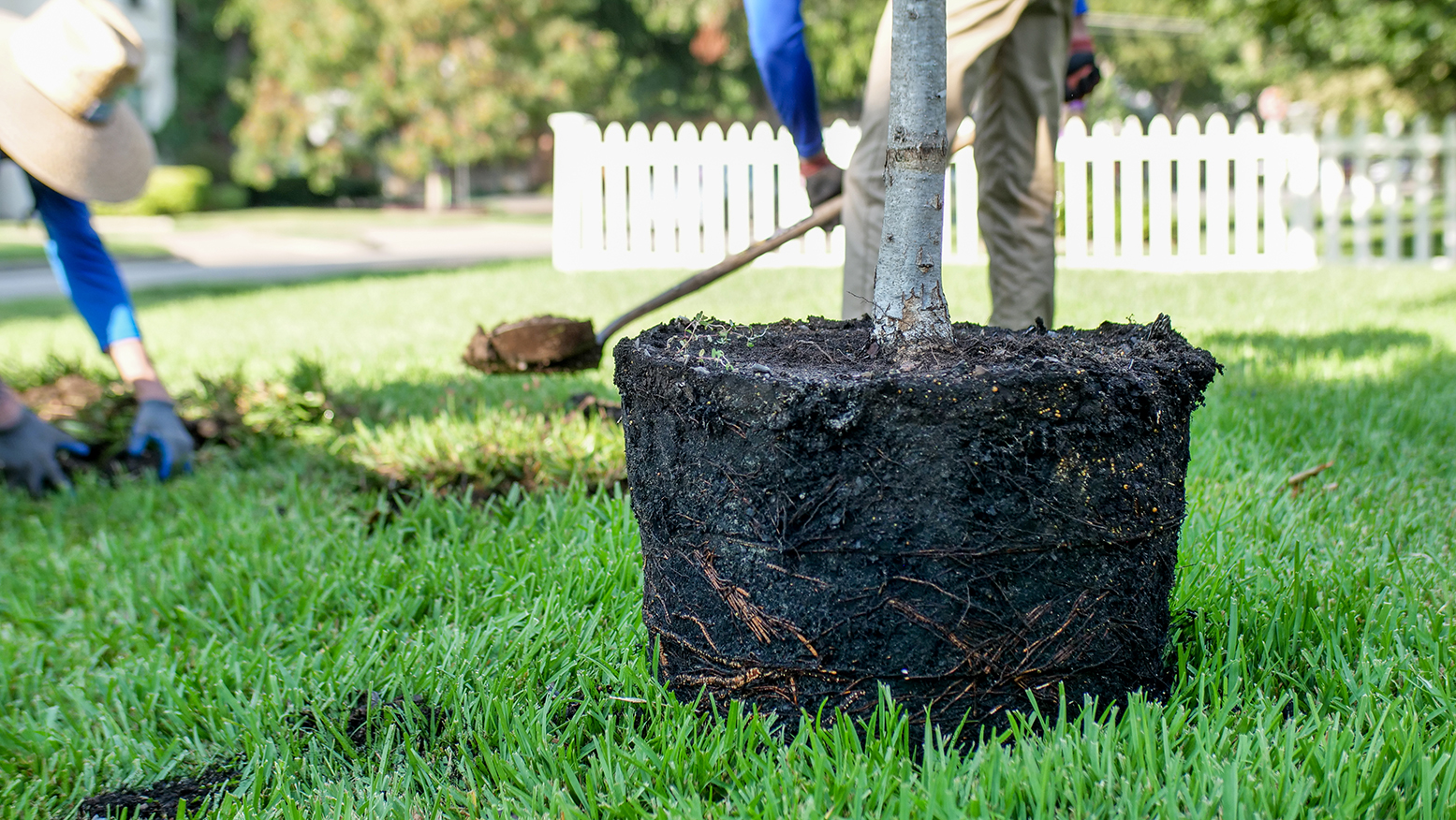
Planting trees requires various considerations, from soil quality to the choice of species. One factor that often goes under the radar is caliper size. There is less likelihood of complications with root health when planting smaller trees. Tree size is an indicator of time. Trees that have spent more time growing inside of a container are more likely to have stress. Smaller trees (one to three inch calipers) are favored because of their healthier root systems. Healthier roots makes establishment more quickly in a new environment. Smaller is better.
What is Tree Caliper Size?
Caliper size refers to the diameter of a tree’s trunk measured above the root flare and below the first branches. It’s an important indicator of the tree’s age and maturity, which can affect its ability to adapt to new environments.
Caliper size gives insight into how a tree might perform when transplanted. Trees with a caliper size of one to three inches often have a better chance of thriving post-transplant due to their relative ease of root establishment.
Why Does Caliper Size Matter in Tree Planting?
A caliper size above one inch means the tree’s trunk has wood that is thick enough to support its canopy without excessive staking. At this size, nurseries have removed the external support stake often used to artificially create a straight trunk while maintaining the spacing needed to maximize even light exposure.
Larger caliper sizes (three or four inches) often indicate older, more robust trees, but they may also face more challenges during transplanting. A tree’s caliper size can affect how it deals with transplant shock, a common issue that can affect tree health. Smaller trees may settle faster and resume growth sooner, while larger ones might require more water and intervention during the acclimatization phase.
Understanding the Establishment Process
The establishment process involves the tree acclimating to its new environment, expanding a strong root system past the borders of its former container, and beginning to grow above ground. Most of a tree’s initial energy after being transplanted goes into its root establishment. This is a crucial phase when the tree’s energy resources are focused below ground rather than in visible top growth. This is why planting guides for fruit trees recommend pinching or pruning off immature fruits during the tree’s establishment.
Resilient Root Establishment with Smaller Caliper Trees
With a smaller root ball, smaller trees can start spreading roots quickly after planting. This rapid root growth is crucial for taking up water and nutrients efficiently, helping them establish faster compared to larger trees. Since larger trees will have had more roots cut, they will remain more vulnerable than small trees for years after planting and may require pruning to balance the nutrient uptake requirements compared to nutrient availability provided by the new root system. In many cases, smaller trees can adapt their root systems more efficiently to the new soil textures and compositions. This adaptability ensures that essential water and nutrient uptake is optimized right from the start. Larger trees may have been over-fertilized or overwatered in the nursery and this also contributes to transplant shock.
Moreover, as smaller trees establish their roots, they increase their ability to withstand adverse conditions like drought or poor soil health. The swift root expansion allows these trees to tap into necessary soil resources before adverse conditions take a toll, further emphasizing the importance of size during the initial planting phase. By prioritizing root establishment before focusing on trunk and canopy growth, smaller trees set a solid foundation for future development and survival.
Possible Complications from of Planting Larger Caliper Trees
Larger trees can establish within the same time period (one to three years) as a smaller tree, but a larger tree has either spent more years in a pot, with repeated root pruning and roots stressed from above-ground storage issues like heat from sun exposure to the sides of the pot, or in the case of balled and burlap trees, the tree has been growing in the ground, and has had a large portion of its fine, nutrient absorbing root network cut off to enable transportation. In either case, this amounts to additional stress on the tree and can contribute to transplant shock.
Better Survival Rates with Smaller Caliper Trees
Large trees have higher post-transplant mortality rates and this is thought to be largely due to the additional transplant stress. In some studies, large trees had up to 40% higher mortality than their younger counterparts despite similar planting conditions and evidence of successful establishment of new roots. Due to their low-stress establishment, smaller trees are often more resilient to environmental stresses such as heat, drought, and pests. Their ability to adapt significantly increases their survival rates. When roots are well-established, trees anchor more securely into the soil, which translates into increased nutrient and water absorption efficiency. This autonomous resource management enables smaller trees to thrive under variable environmental conditions and ensures higher survival potential.
Smaller Caliper Trees are More Cost-Effective
Planting smaller trees isn’t just a smart horticultural choice; it’s also cost-effective. Smaller trees require less maintenance and resources, making them an eco-friendly option. Their fast establishment reduces the need for additional interventions, promoting sustainable gardening practices.
From a financial standpoint, opting for smaller trees can significantly reduce landscaping costs. The initial purchase price is drastically lower, and the associated costs of planting, and nurturing are much reduced.

At Texas Tree Surgeons we love trees. Our tree planting service includes professional tree selection, delivery, and planting. If you would like a larger caliper tree we can help source a healthy tree. Our recommendations are guided by best practice. As always, let us know if you have any questions about tree caliper size and transplant success.
 PREV BLOG
Tree Planting
Growing Together
EXPERT KNOWLEDGE AND SKILLSET
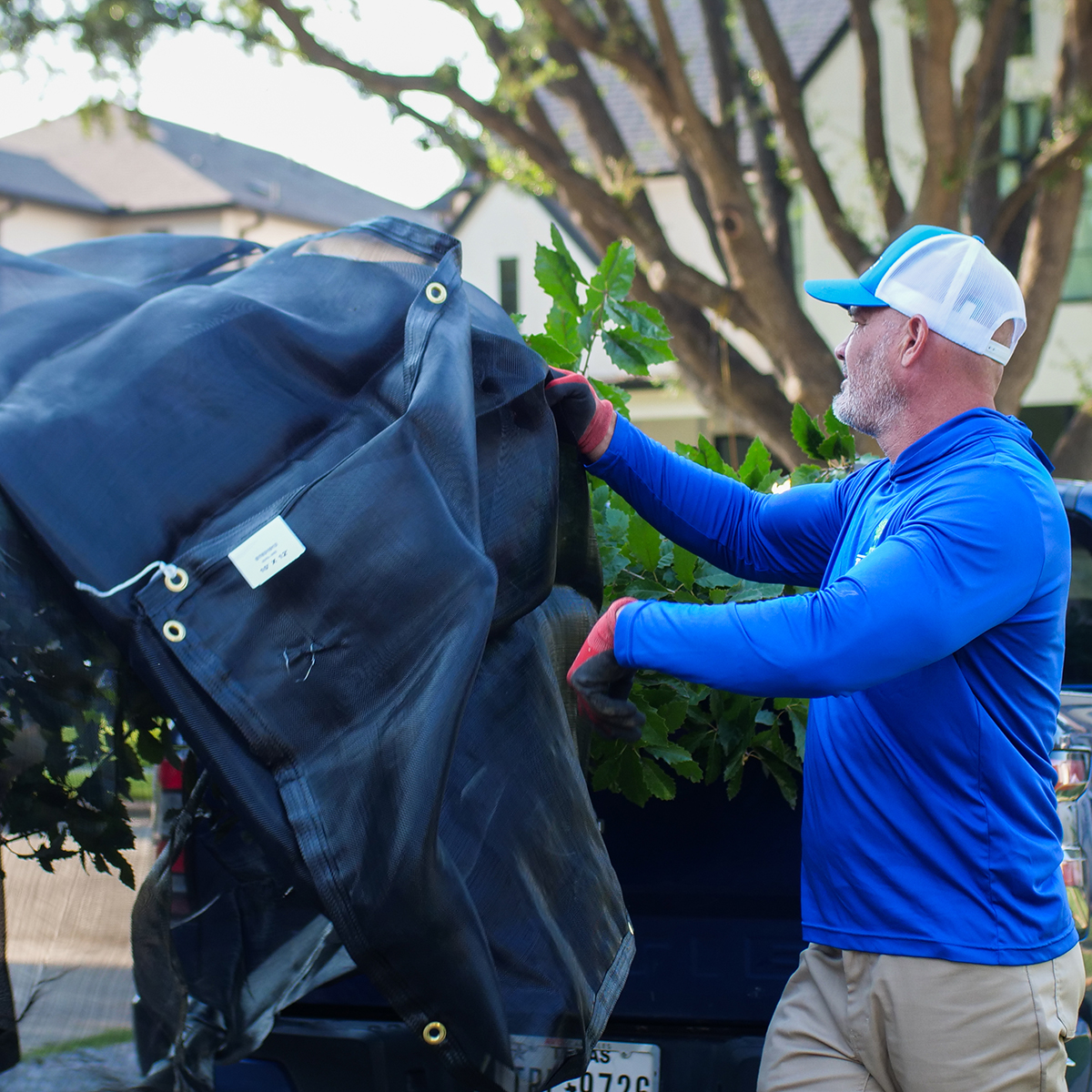
We begin by choosing the best trees. Every tree is inspected closely by our arborists to ensure the best stock is installed at your property.
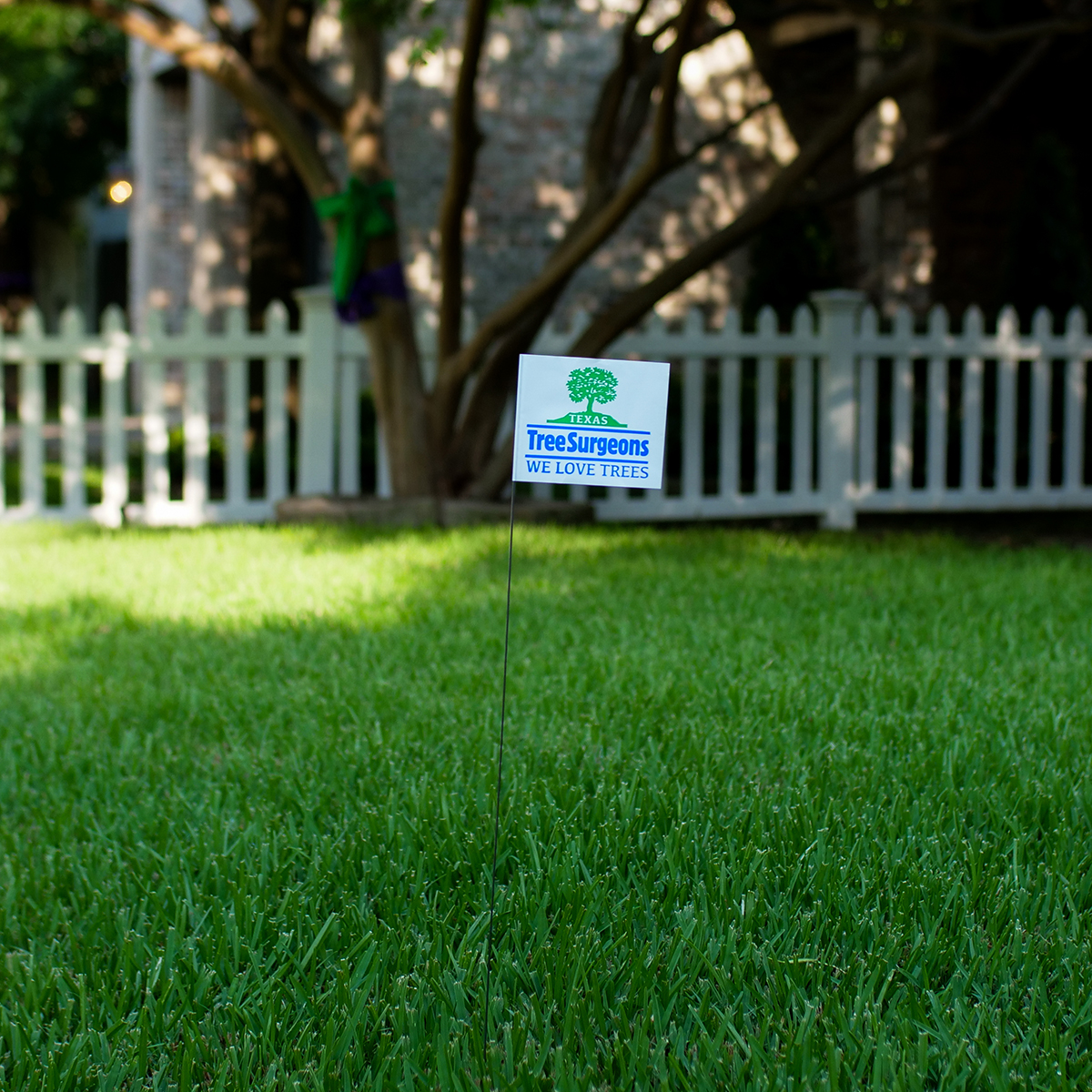
CUSTOMIZED PLANNING FOR YOUR LANDSCAPE
Prior to planting your new tree an arborist will work with you to find the best location on your property to optimize tree health and growth once installed. Depending on the size of the tree and how long ago the tree was removed from a spot will determine if that location can be used to replant.
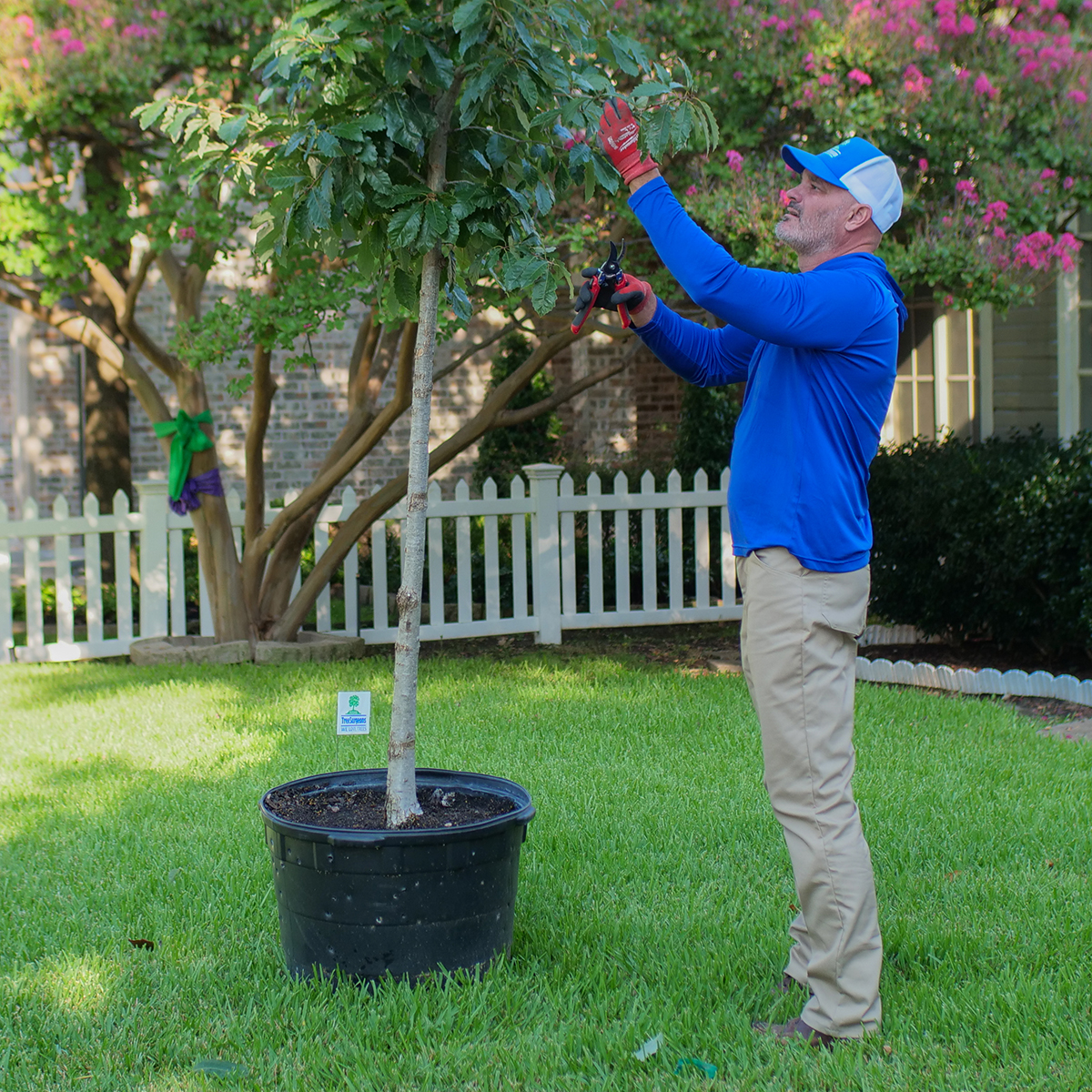
ENCOURAGING HEALTHY DEVELOPMENT
If needed, we will do structural pruning to ensure your tree grows beautifully. Prior to arrival we ensure all trees that are selected have healthy dominate stems.
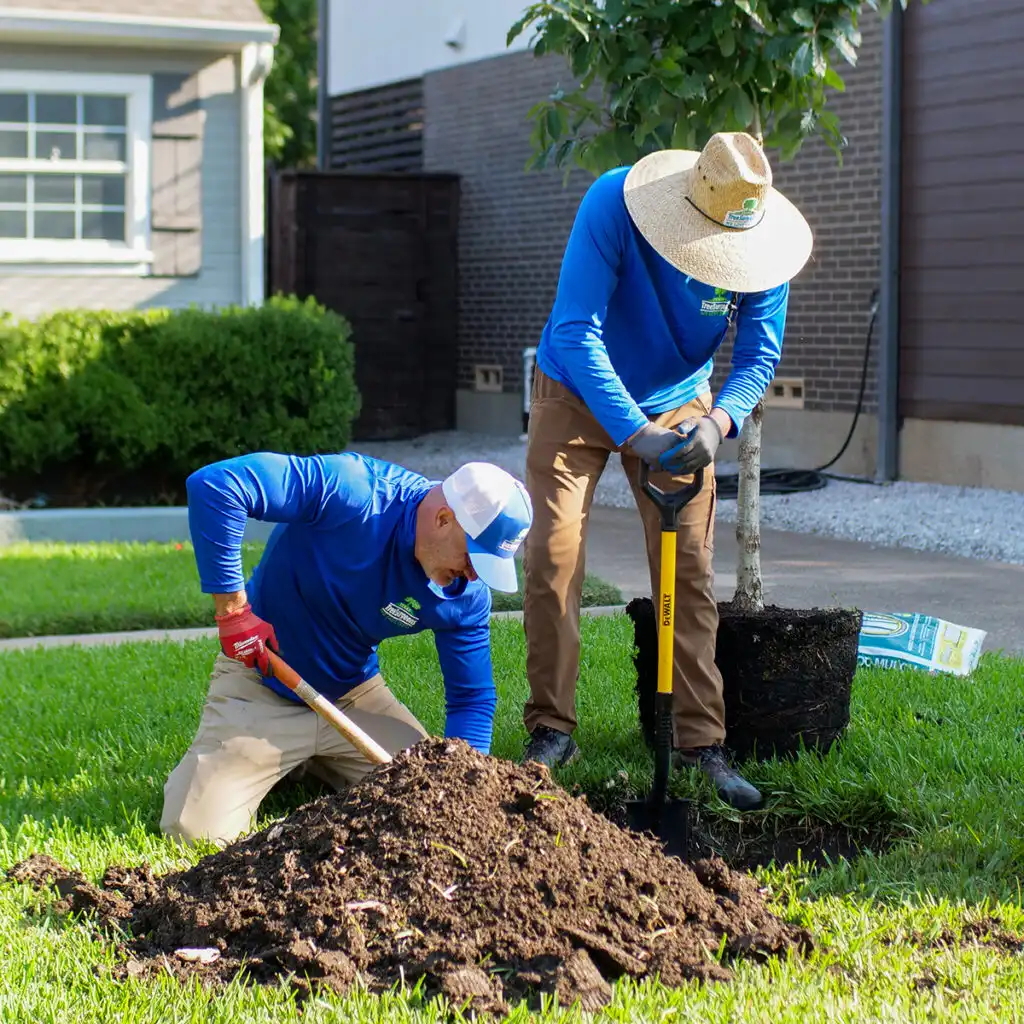
PROPER PLANTING TECHNIQUES
The key to successful tree planting starts from the ground up. Digging the right hole is essential for the tree's success—it's not too deep and wide enough to support proper root growth.
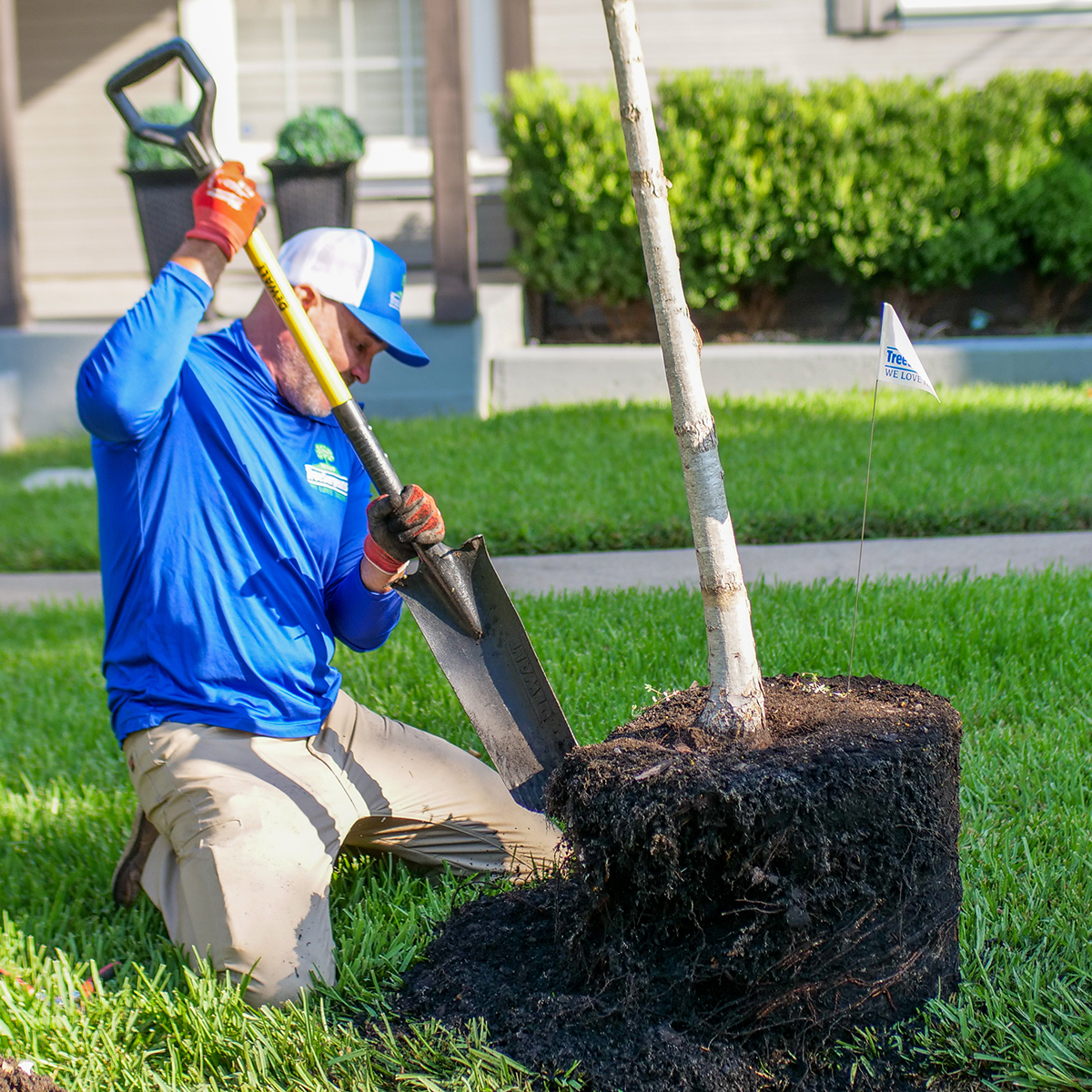
BREAKING APART ROOT BALL
It may look alarming but it is important to break apart the root ball so the roots are able to grow outwards instead of wrapping around itself. Their roots have been bound in a container for a long time and need to be trained to grow outward.
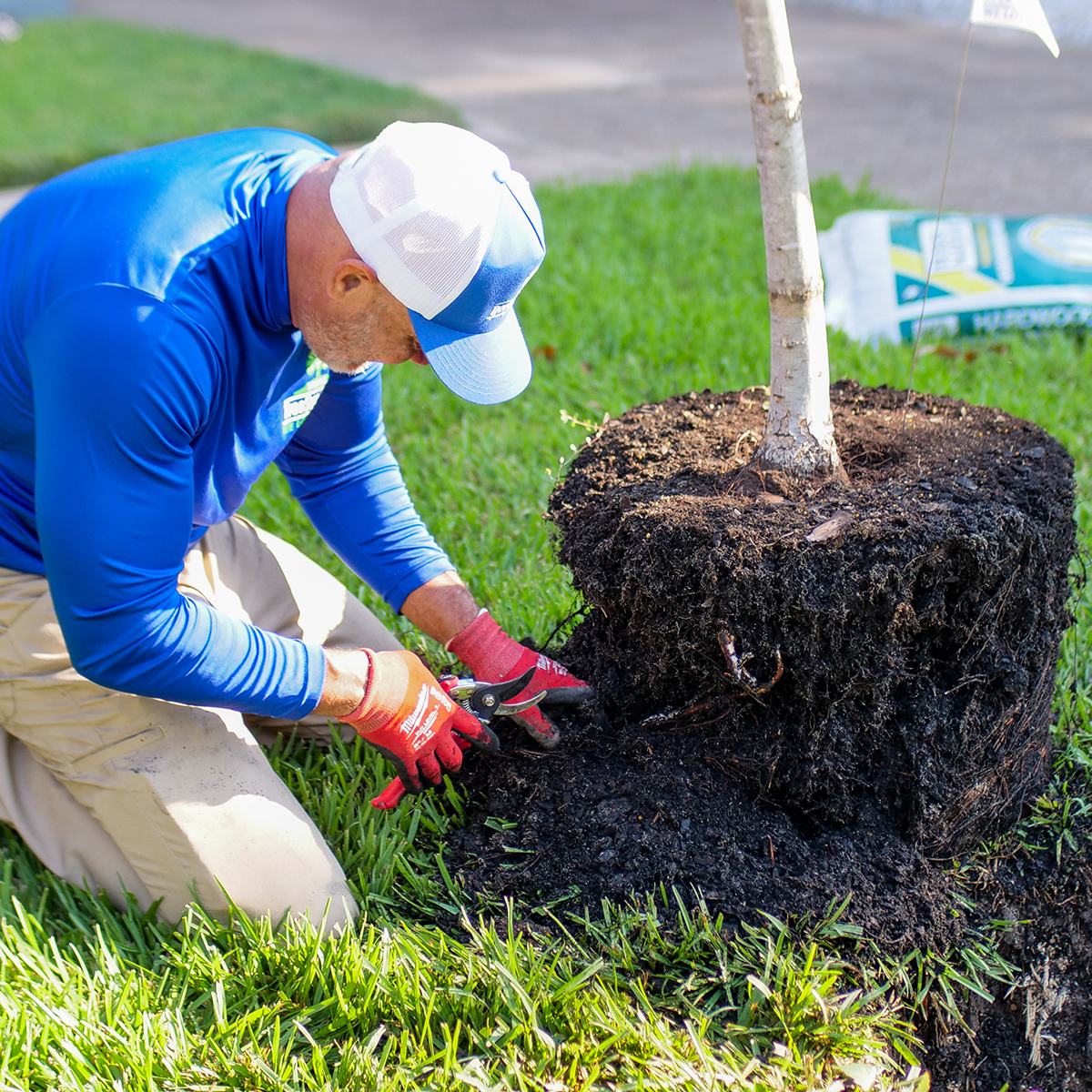
ROOT PRUNING
Root pruning is essential in establishing healthy roots when planting trees. Removing problematic girdling roots ensures healthy trees from the ground up.
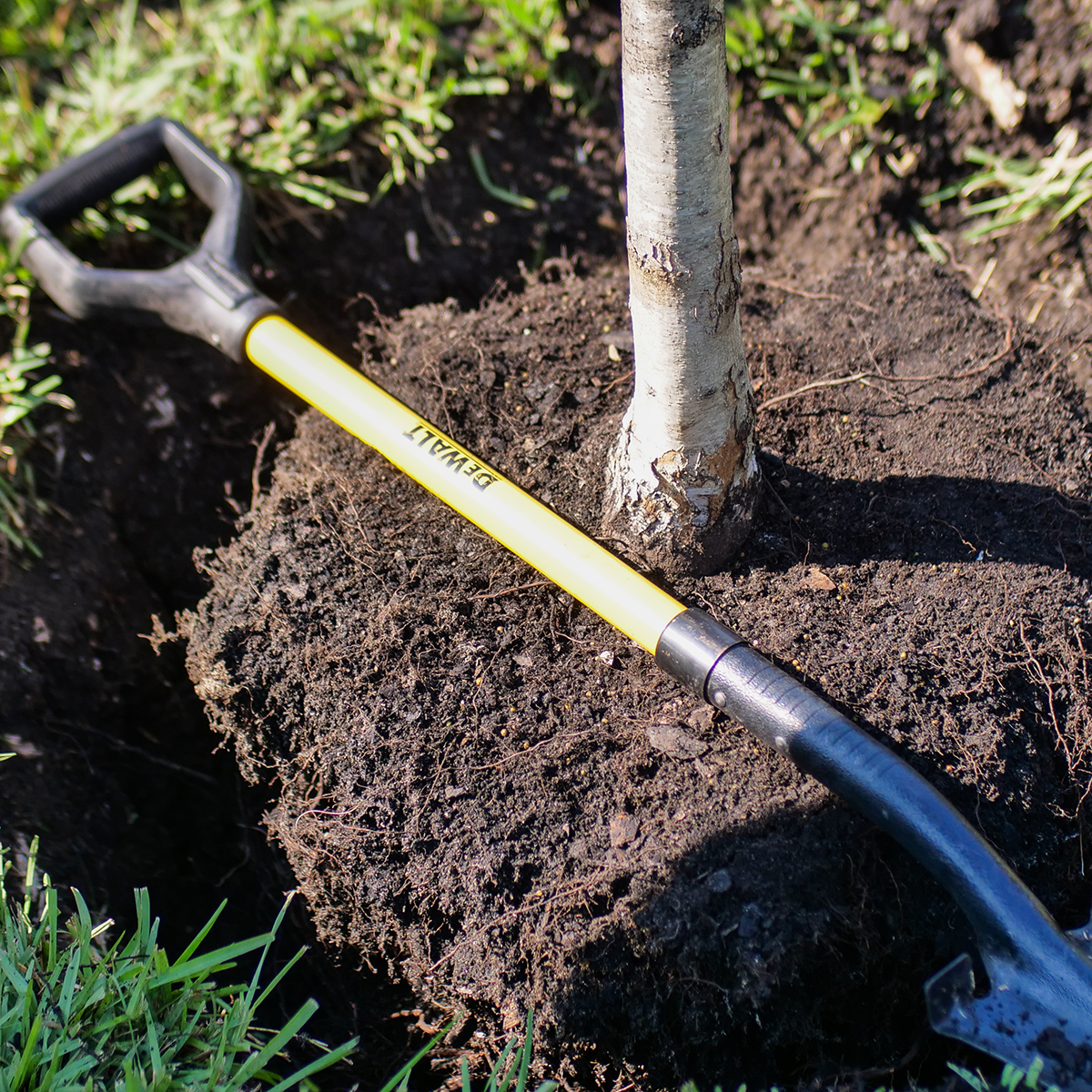
PROPER HOLE DEPTH AND WIDTH
We plant the tree in the ground and take great care to ensure that the tree is at the correct depth and is straight.
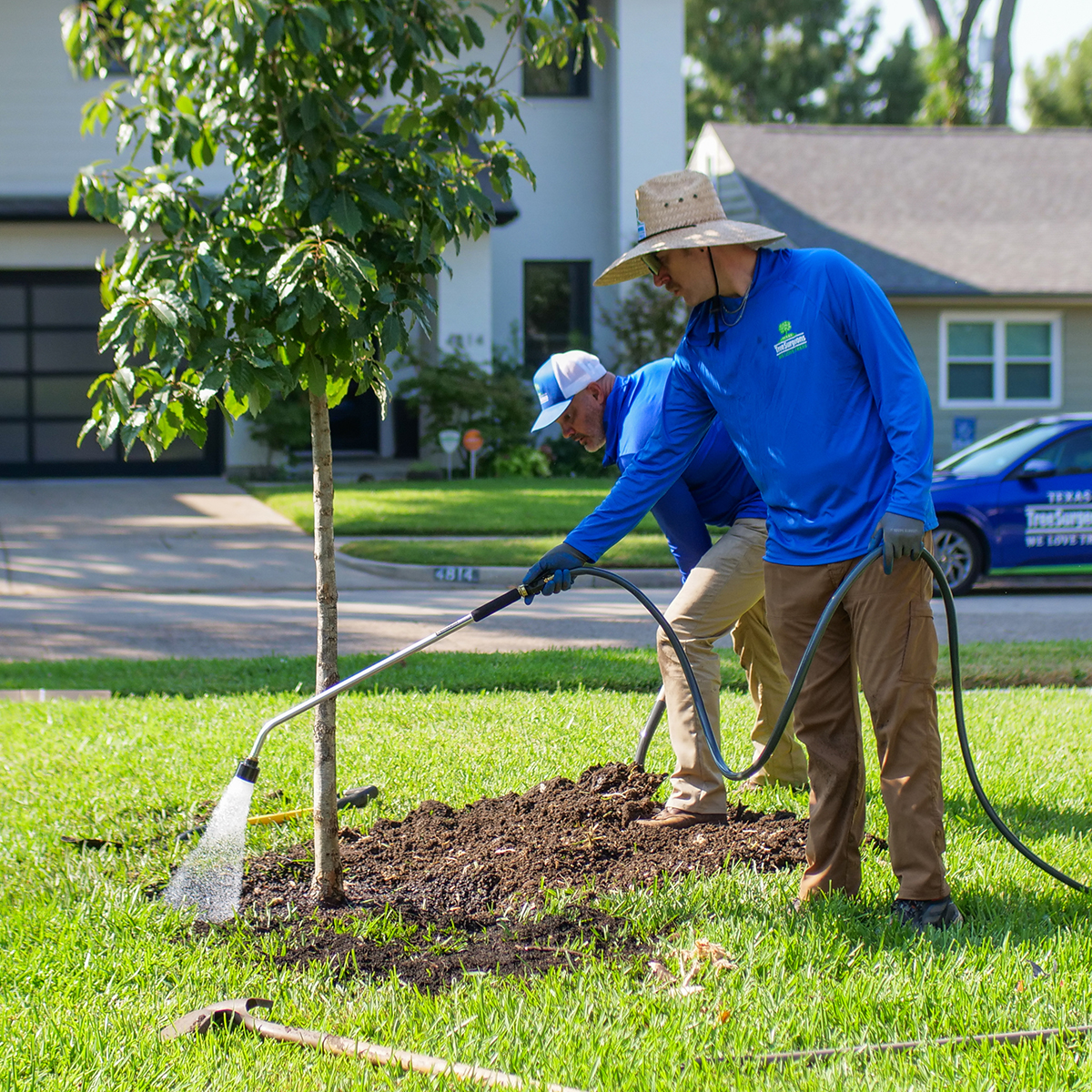
BACKFILL WITH SOIL & WATER
Now that the tree has been installed we backfill with water to help the soil settle and secure the tree's roots into the ground. If the tree is properly planted there will not be a need for stakes to keep it in place.
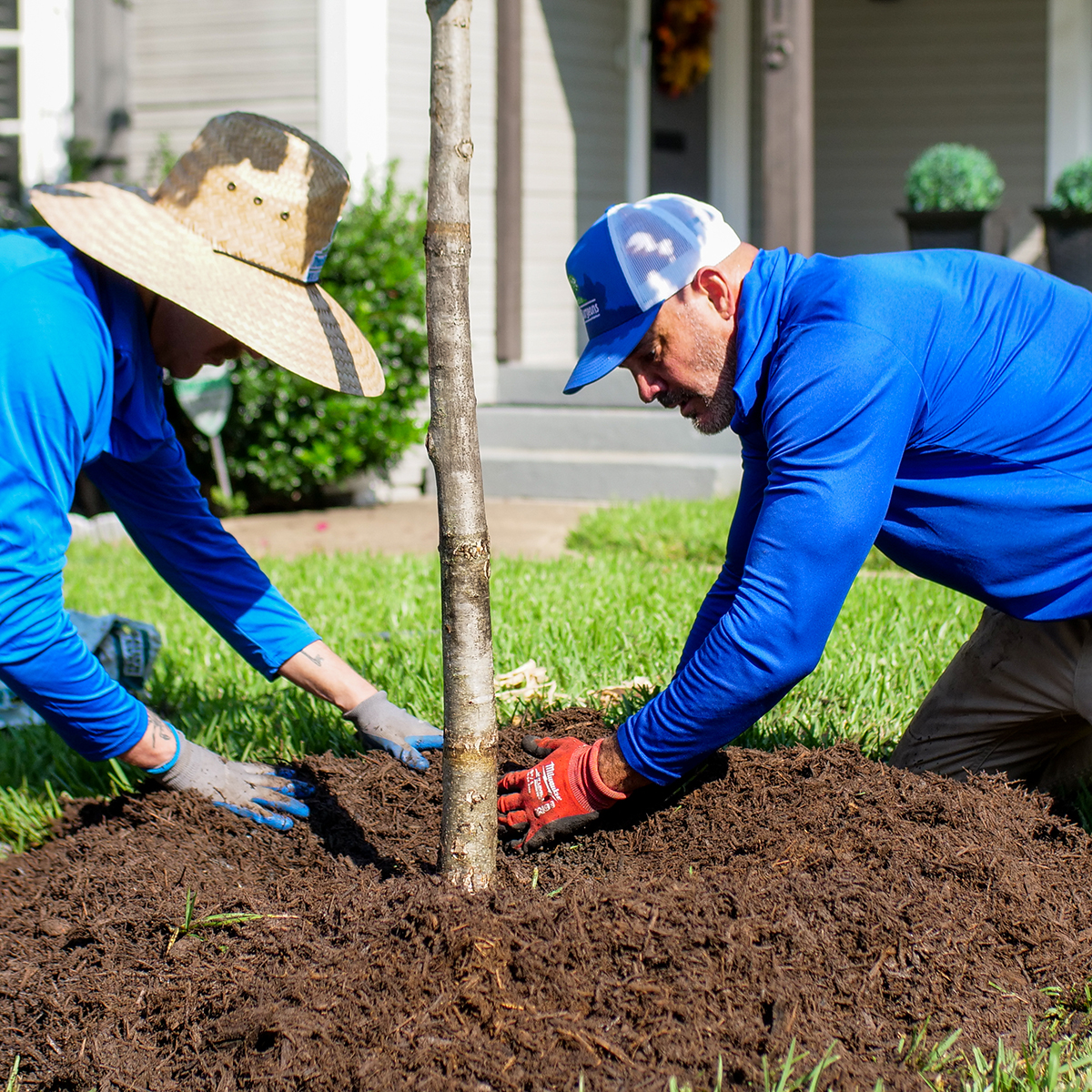
MULCH
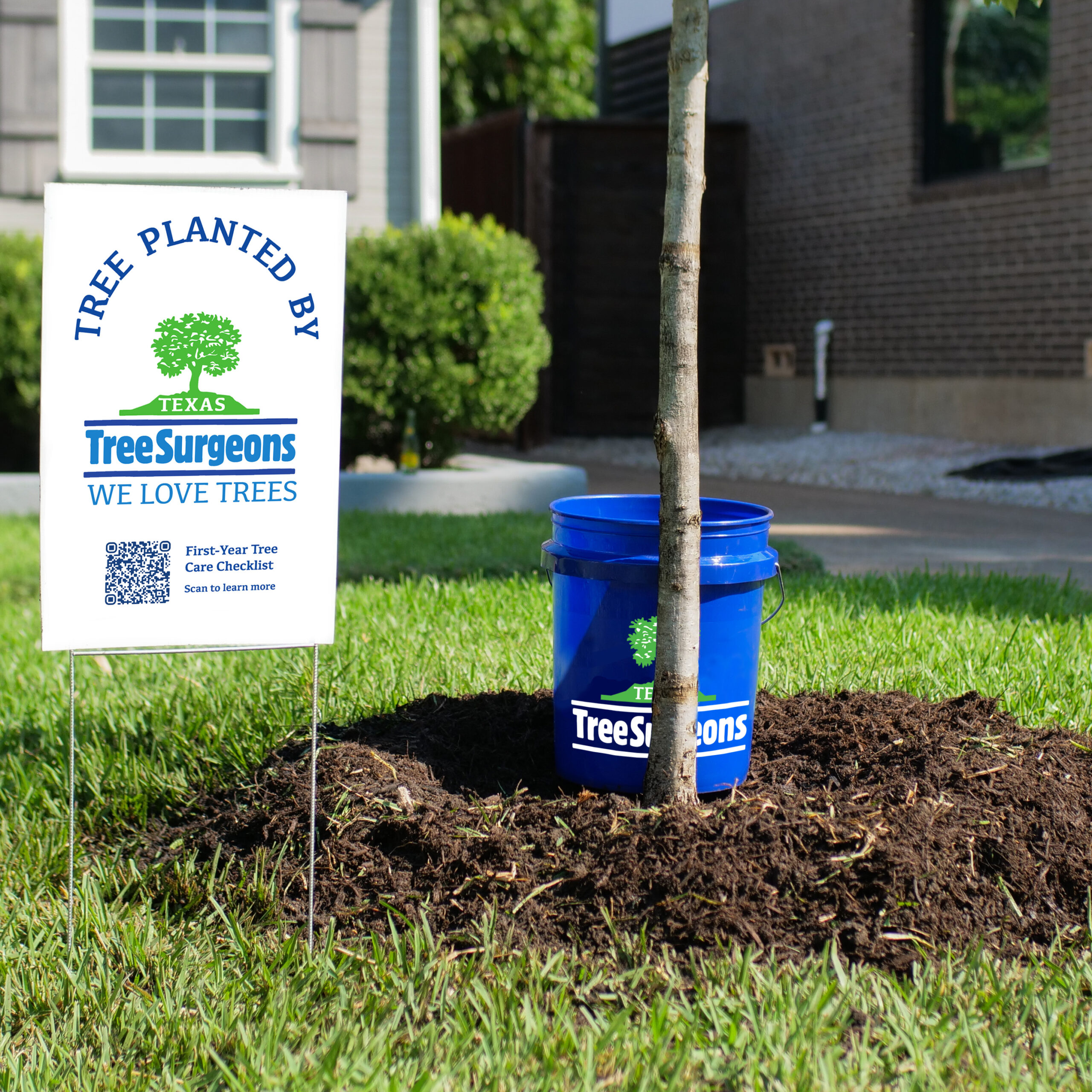
Our crew will then mulch the tree, making sure to create a bowl shape to protect the base. Be careful not to let the mulch pile up around the trunk, as it can harm the tree and void the warranty.
PROPER WATERING TECHNIQUE
Before leaving we do one more final soaking once the tree has been planted. We will also leave a detailed care guide and a 5 gallon blue bucket with soaker holes to help you water your tree properly. Watering your tree with two buckets full every other day for the first two weeks will set your tree up for long-term growth.
Related Blogs
Similar blogs related to this topic


How to Make Sure Your New Tree Establishes and Survives the First 5 Years
Properly planting a tree is just the beginning. The immediate years following planting are often the toughest. Newly planted trees are most susceptible to extreme environmental and physiological stresses. Follow proper watering, mulching, and pruning…
Read more
Current Tree Watering Guidelines for Newly Planted Trees
Tree Watering for Newly Planted Trees Newly planted trees require consistent moisture while their root systems become established. North Texas heat, drought, and heavy clay soils can make this especially challenging. The schedule below is…
Read more
Current Tree Watering Guidelines for North Texas
Tree Watering for Newly Planted Trees Newly planted trees require consistent moisture while their root systems become established. North Texas heat, drought, and heavy clay soils can make this especially challenging. The schedule below is…
Read more