Why Do Trees in North Texas Need Disease Management?
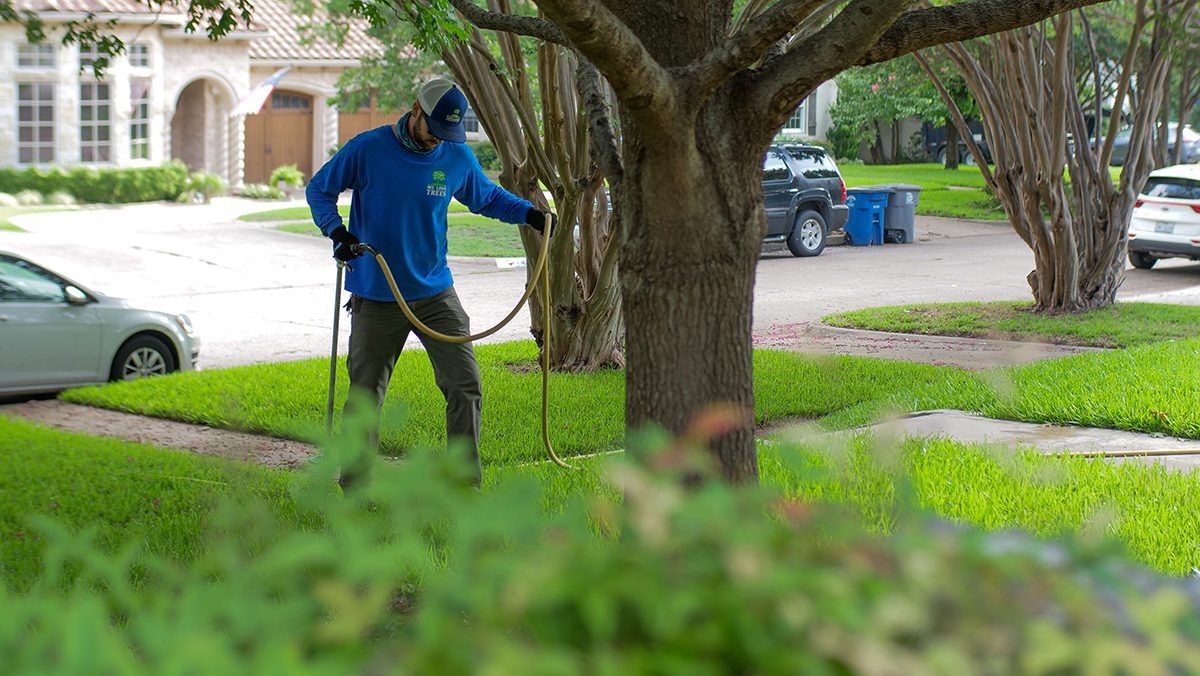
Trees are a vital part of North Texas’s urban landscape, providing shade, oxygen, and aesthetic beauty. Yet urban trees face threats from various diseases that can severely affect their health. Diversifying tree species plus annual tree assessments help slow down the spread of disease. Understanding the importance of disease management and tree diversity is crucial for maintaining the vibrant tree populations in the area and maintaining long term health.
What is Disease Management in Tree Health Care?
Disease management in tree health care involves identifying, preventing, and controlling diseases that affect trees. This process ensures trees remain healthy and thrive within their environments.
It’s rare for a single disease or insect to kill a tree outright. More often, a stressed tree becomes vulnerable to multiple pests or pathogens over time, resulting in a slow and irreversible decline. That’s why early intervention and proactive care are so critical.
Managing tree diseases effectively requires an understanding of timing, management techniques and treatment options. It involves regular monitoring and assessment of trees to promptly identify any signs of disease outbreaks. Tree maintenance practices that include proper watering, pruning, and fertilization contribute significantly to keeping trees resilient against diseases. Healthy trees are better equipped to resist infection and recover from environmental stress.
Common Tree Diseases in North Texas
- Oak wilt is a notorious tree disease in the region caused by a fungus that can quickly kill affected trees if not managed properly.
- Hypoxylon Canker is a fungus that coexists and lives naturally in all trees, it’s not until a tree becomes stressed by other factors do we see their fungal mats.
- Bacterial Leaf Scorch is a disease that can lead to tree decline and even death if not properly managed. This bacterium resides in the xylem, which is the part of the tree responsible for transporting water and nutrients. The disruption in this vital system results in scorching, as the tree struggles with nutrient deprivation.
- Anthracnose is caused by several species of fungi that spread via airborne spores and rain splash. These pathogens primarily attack leaves, stems, and twigs—disrupting normal growth and leaving trees vulnerable to further stress.
- Powdery Mildew is a common fungal disease that affects a wide variety of landscape trees and shrubs in North Texas. While it often appears mild at first—just a light white or gray coating on leaves—this disease can quickly spread, leading to leaf yellowing, distortion, and premature leaf drop.
Proper disease management can help mitigate these issues by breaking the disease cycle through targeted scientifically backed interventions. As the seasons change, paying attention to the signs of common tree diseases can save your trees from long-term harm.
Why is Disease Management Essential?
Without disease management, trees may succumb to diseases that could weaken or kill them, impacting their ecological and aesthetic contributions.
The absence of adequate disease management can lead to a domino effect, where the declining health of one tree might affect surrounding vegetation. Trees play a crucial role in maintaining air quality, providing habitats for wildlife, and enhancing property values. The lack of disease management can disrupt this balance, leading to greater ecological and economic losses.
Implementing a comprehensive disease management strategy ensures that the trees continue to provide shade, contribute to biodiversity, and promote a healthier environment. Moreover, it extends the lifespan of the trees, allowing them to fully mature.

How Can You Identify Tree Diseases Early?
Spotting early signs like discolored leaves or unusual growth patterns can help in managing tree diseases effectively before they spread extensively.
Early identification relies on regular inspections and knowing what to look for. Leaf discoloration, premature leaf drop, and visible fungal growth are blatant indicators that something might be wrong. Routine inspections offer a proactive approach, capturing potential issues before they develop into severe problems.
Staying educated on what symptoms each disease presents will equip homeowners with the knowledge to act quickly. For example, if you notice wilting leaves or branches, it could be a sign of root disease, whereas cankers might indicate bacterial infections. Timely detection ensures proper action is taken.
When to Seek Professional Help
Tree expert help should be sought when a disease is beyond basic control measures, which requires expert intervention for effective treatment.
Complex diseases that affect the tree’s overall health often require analysis beyond what casual observation can diagnose. When symptoms persist or worsen despite initial interventions, it’s crucial to seek professional assistance. Certified arborists can provide thorough assessments and develop tailored scientifically backed strategies to restore the tree’s health.
Tree experts can offer services like advanced diagnostics, specific treatment plans, and long-term maintenance programs to promote robust tree health. When in doubt, reaching out can save your trees and renew the beauty and value of your landscape.
Protecting North Texas Trees Through Disease Management
Implementing effective disease management for trees in North Texas ensures healthier landscapes and longevity of these vital ecological assets. By identifying symptoms early and seeking professional interventions when necessary, the community can preserve its natural vegetation against disease threats.
Having a proactive approach to tree health care with a certified arborist will renew your landscape and preserve the health of your trees.

At Texas Tree Surgeons we love trees. Let our experienced team assess your property and design a tree care plan tailored to your landscape. Whether you’re dealing with a specific issue or just want to keep your trees healthy, we’re here to help. Tree preservation with a Certified Arborist will protect your trees from decline.
 PREV BLOG
Tree Health Care
View Photos of our ISA Certified Arborists & Tree Health Care Technicians Providing Consultation and Care

TREE SUPPORT SERVICES
Depending on the size of a tree there can be multiple cables in addition to bracing to support the weight. Each tree is different, and not all trees are candidates for tree support systems due to their structure.

ISA CERTIFIED ARBORIST
Certified Arborist are tree care professionals who have achieved a high level of professional distinction through their knowledge and experience in the field. This knowledge helps them diagnose any issues your trees might be having.

PREVENTATIVE EAB TREATMENT
If there is EAB activity within a few miles of where you live or property you manage we recommend preventative systemic insecticide treatment applied by a licensed TDA tree health care technician. EAB treatment lasts for 2 years and must be applied regularly to protect ash trees from infection.

OAK WILT TREATMENT
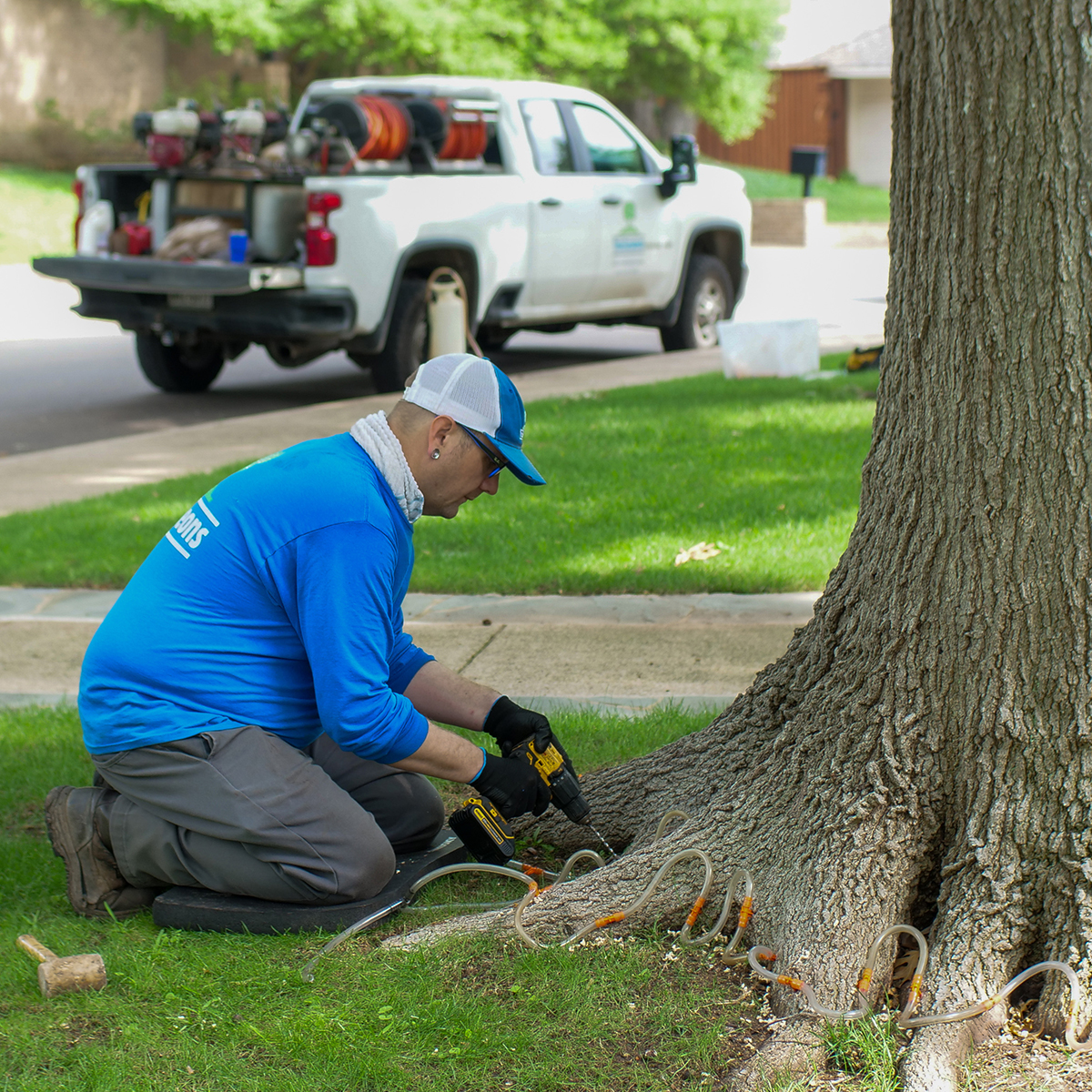
As oak wilt is a systemic, vascular disease, the most effective treatments consist of injecting the infected trees with a fungicidal chemical. The only currently recommended fungicide is Alamo®, a formulation of the fungicide propiconazole. The fungicide is administered through holes drilled in the root flare of the infected tree and should only be applied by Texas Department of Agriculture Licensed Applicators.

SOIL AMENDMENTS
Our uniquely developed mixtures promote stability and growth for trees efficiently and safely, without the worry of harmful chemicals that some companies use that can be damaging to the surrounding environment.

STRESSED MAGNOLIA | BEFORE
This magnolia tree is one of many that were in decline on a single property. This photo is from April 15, 2024 prior to the tree receiving a tree health care plan.

STRESSED MAGNOLIA | AFTER
This after photo was taken June 27, 2024 of a magnolia tree after receiving multiple interventions to improve its health. In addition to a tree health care plan of a deep root fertilization with Biopack plus and Sea3 applied by our TDA licensed technician the owner also fixed the irrigation and cleared the root flare. The difference in health is beautiful.

TDA LICENSED
Our technicians are TDA licensed and use science based treatment when implementing a Tree Health Care plan. These plans are put in place under the guidance of an ISA Certified Arborist.

DIAGNOSING TREE
Our ISA Certified Arborists use several different types of tools to help them assess a trees health. The arborist is "sounding" the tree. Different sounds can indicate areas of decay or other defects.

FERTILIZATION
Our Tree Health Care Programs are designed to deliver the right nutrients at the right times throughout the year. We use the highest quality soil conditioners and fertilizers that are delivered at critical points throughout the seasons to optimize the growth and health of trees.

DEEP ROOT INJECTION SERVICES
At Texas Tree Surgeons our deep root injection services provides fertilization deep into the soil. Our unique mixtures combine macro- and micro-nutrients, root growth stimulators, soil conditioners, beneficial biotics (both mycorrhizal fungi and rhizobacteria), and organic materials to cultivate the optimum natural growth environment.

AIR SPADING
Air spading helps improve tree health by increasing the tree root's access to air, water, and nutrients by decompacting the soil. Soil compaction occurs in urban environments during turf installation, construction, improper planting, and mechanical and foot traffic.

ROOT PRUNING POST AIR SPADING
To correct this improperly planted tree our Tree Health Care Technicians air spade to expose the root flare and to prune away girdling roots. You can learn more about how to properly plant a tree here.

GIRDLING ROOTS
This tree was planted too deep and has several girdling roots (roots that circle the tree and do no flare out) that left unmanaged would eventually kill the tree. After air spading our Tree Health Care Technicians are pruning the roots and adjusting the soil around the tree to expose the root flare to improve tree health.

TREE HEALTH CARE
Director of Tree Health Care Development, Steve Barrett pointing out sections in the tree that need to be addressed for improved health.

INSPECTING FOR POSSIBLE DECAY
Sometimes issues with a tree aren't clearly visible on the outside so an arborist will need to inspect the interior. An arborist does this by probing with a small knife to see how extensive the decay in a region of a tree is. Arborists are able to use this information along with other signs to determine if there are potential structural issues or possible increased chances for failure.

MEASURING DBH
The best way to approximate the size of a tree is to measure their dbh, (diameter, breast, height). This enables our arborists to estimate the amount needed for Tree Health Care products or pricing for Tree Removal.
Related Blogs
Similar blogs related to this topic

Why Oak Wilt is Especially Devastating on Red Oaks
Oak wilt is one of the most serious tree diseases we see in North Texas. While all oak trees are susceptible, red oaks are especially vulnerable and often decline much faster than other oak species.…
Read more
How to Identify and Get Rid of Oak Wilt
Texas has the highest concentration of oak trees in the United States. Oak wilt is a serious threat to our North Texas urban forest, infection centers among live oaks specifically expand at an average rate…
Read more