The Dallas Morning News | Constant State of Stress
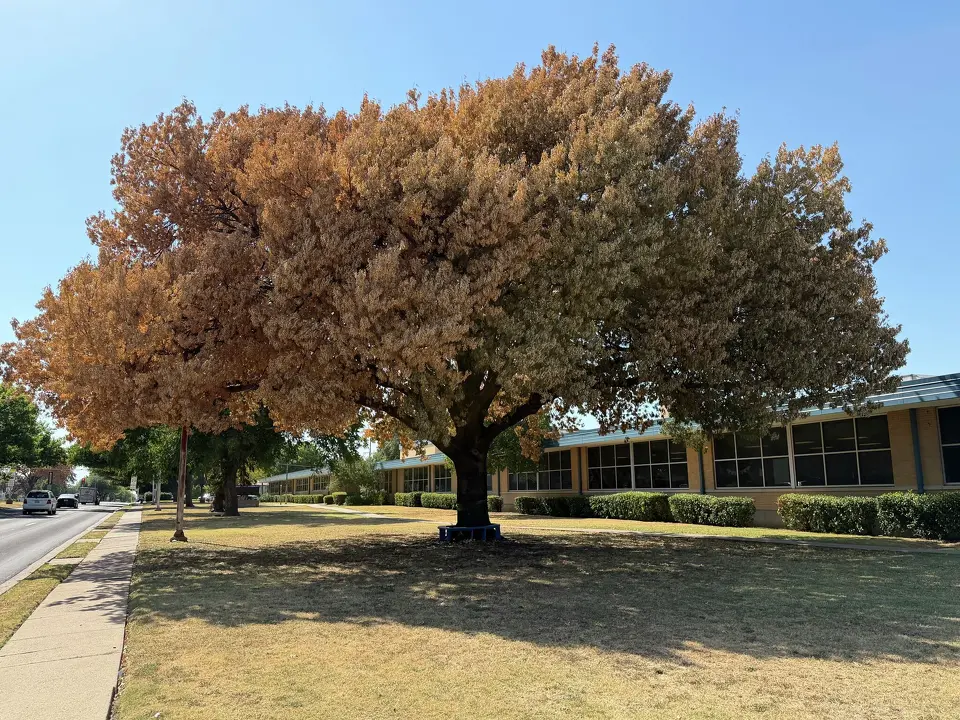
We spoke with The Dallas Morning News about heat stress and what North Texans can do to help their trees recover.
“Here in Texas, we go through these droughts all the time,” King said. “This year is going to [have] a long-lasting effect, and recovery of this type of environmental stress is a multiyear process.”
Link to article: https://www.dallasnews.com/news/weather/article/extreme-heat-drought-impacting-north-texas-trees-22398145.php
Heat Stress on Trees
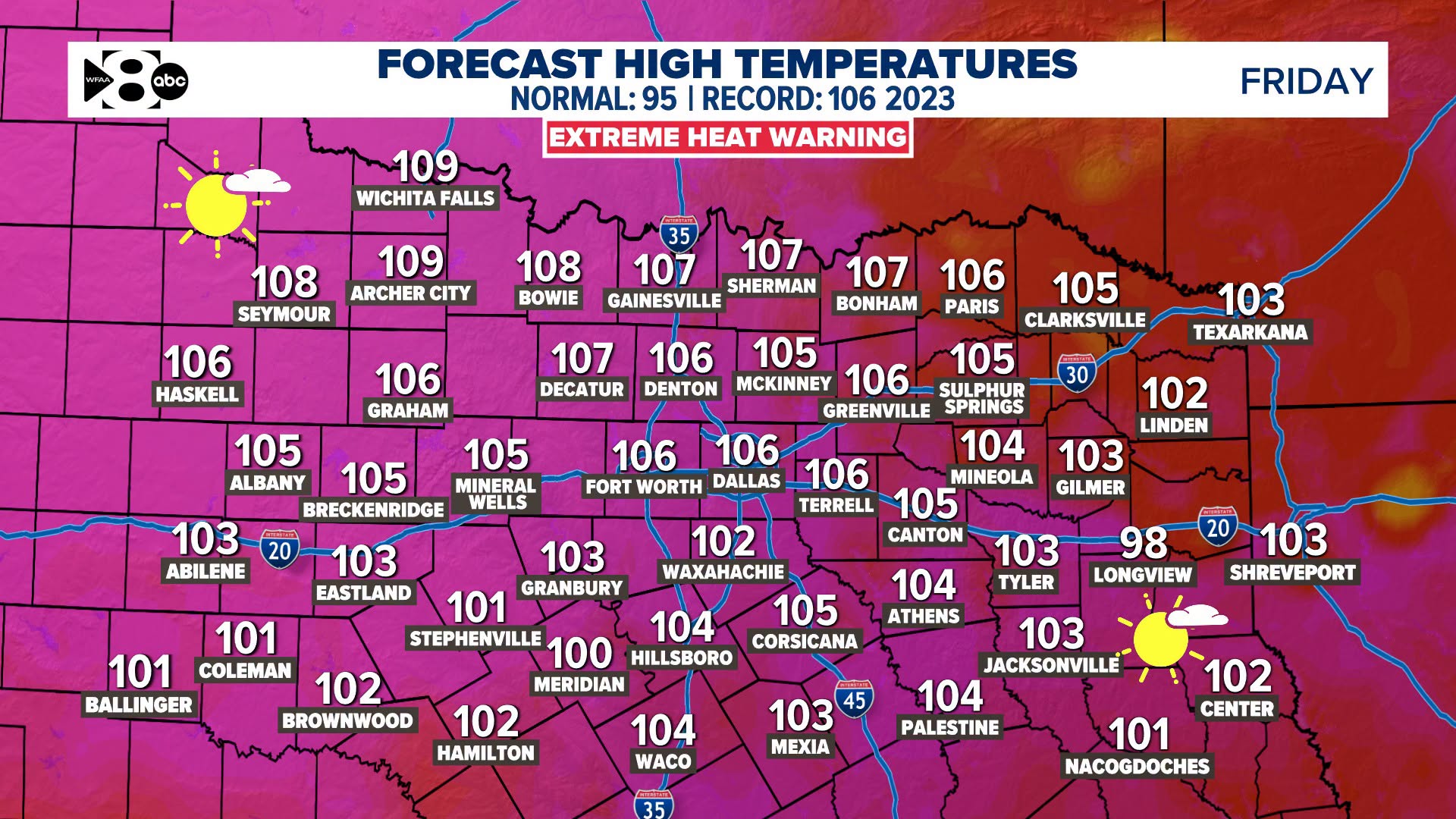
Extreme summer heat (100 degrees F or more) paired with heavy black clay soils is accelerating root dehydration. During droughts, black clay soils found in most of North Texas shrinks and cracks, pulling away from root systems.
High soil temperatures combined with dry soil can damage fine absorbing roots—the small roots responsible for taking up most of a tree’s water and nutrients. Once those roots decline, the canopy may show symptoms later.
Urban Heat Island (UHI) Effect:
Highly developed parts of Dallas experience ambient afternoon temperatures over 10°F warmer than surrounding rural areas. Hardscape surfaces (concrete, asphalt, buildings) radiate heat late into the night, preventing tree root systems from recovering even after sunset.
A tree may survive one severe summer but enter the following year with depleted energy reserves and a reduced root system. Repeated stress can create a downward spiral and make the tree more susceptible to insects, disease, and secondary problems.
Symptoms Texas Tree Surgeons Arborists are Seeing
- Leaf curling/ wilting
- Leaf scorch: browning of leaf margin
- Pale green or yellow leaves
- Premature leaf drop
- Sudden branch drop
Issues That are Delayed Due to Chronic Drought Stress
Opportunistic insects and disease:
- Oak borers
- Hypoxylon canker
- Spider mites
- Bacteria leaf scorch
- Hard scales
- Aphids
Texas Tree Surgeons Recommendations for Heat Stress
Tree Assessment and Inspection
Have a consulting arborist out to diagnose not just the symptoms but the history and property.
Watering
For established trees during prolonged hot, dry periods, supplemental irrigation should generally be applied slowly beneath the canopy and extending outward where practical. The exact amount and frequency should depend on soil and current temps. The ideas is to saturate the soil and allow it to dry out. Clay soils take much longer time to dry.
Mulching
A roughly 2–4-inch organic mulch layer can help moderate soil temperature and conserve moisture, but it should be kept away from direct contact with the trunk.
What to Expect From North Texas Trees Post Extreme Temperatures
Healthy leaves depend on healthy roots, and protecting the root zone from extreme heat, drought, compaction, and disturbance is one of the most important things we can do for urban trees.
 PREV BLOG
Related Blogs
Similar blogs related to this topic
North Texas Extreme Heat is Drying out Trees
The high temperatures in North Texas aren’t going anywhere and our trees are showing signs of stress from heat. What can home owners do? Water your trees! Same tree just days apart showing how quick…
Read more
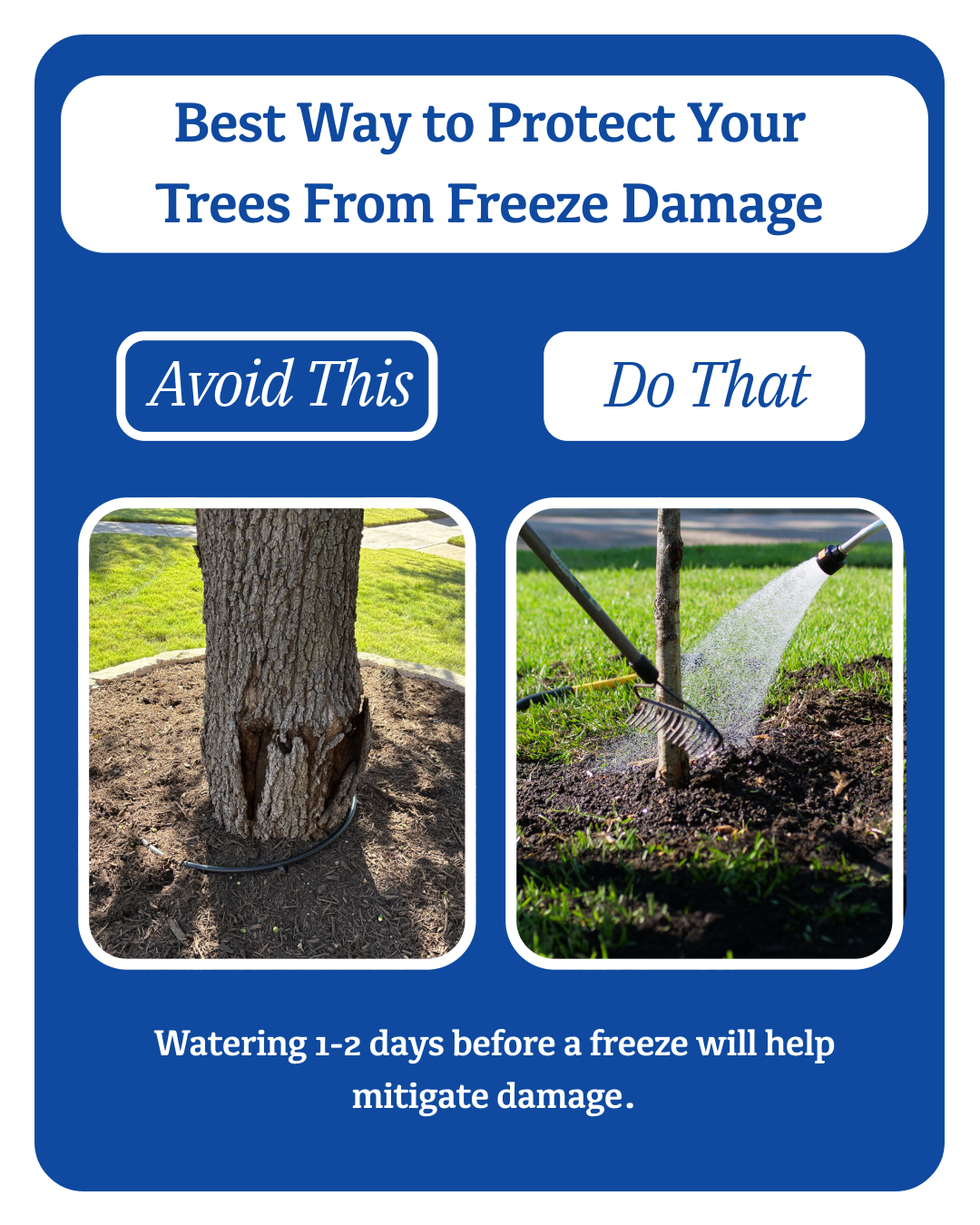
Here's the one thing you can do to help your trees ahead of the winter storm
Excerpt from WFAA of owner, Amy Langbein Heath discussing what to do to prepare for this winters forecasted freeze and snow. Share This Blog
Read more

Oncor Agrees, May 28 Storm Was the Worst Dallas has Seen
Our staff already knew this but seeing this make the news will hopefully help some customers understand that this storm was unprecedented. Over 650,000 people were out of power due to the storm. To learn…
Read more