• Skip to main content
  • 469-387-6000
  • [email protected]
  • Local Arborist
  • Services

    All Services

    Local Arborist

    Consulting

    Tree Trimming

    Tree Removal

    Tree Health Care

    Tree Planting

    Stump Grinding

  • Service Area
    Addison Allen Arlington Carrollton Colleyville Coppell Dallas Denton Euless Farmers Branch Flower Mound Fort Worth Frisco Garland Grand Prairie Grapevine Highland Park Irving Keller Lewisville McKinney Mesquite Murphy North Richland Hills Plano Prosper Richardson Rockwall Southlake Trophy Club University Park Wylie
  • Information
    About How We Work Faqs “Arborist” vs. “Certified Arborist” Emergency Tree Work Gallery Insurance and W9 Information
  • Testimonials
  • Blog
    All Blog North Texas Tree Owner’s Guide Tree Recommendations Insects & Diseases Whats Wrong with My Tree Fall Tree Care Winter Tree Care Spring Tree Care Summer Tree Care
  • Pay Invoice
  • Contact Us
  • Tree Species
  • Tree Health Care

Crape Myrtle Care Made Easy: 9 Tips for North Texas Landscapes
May 15, 2026

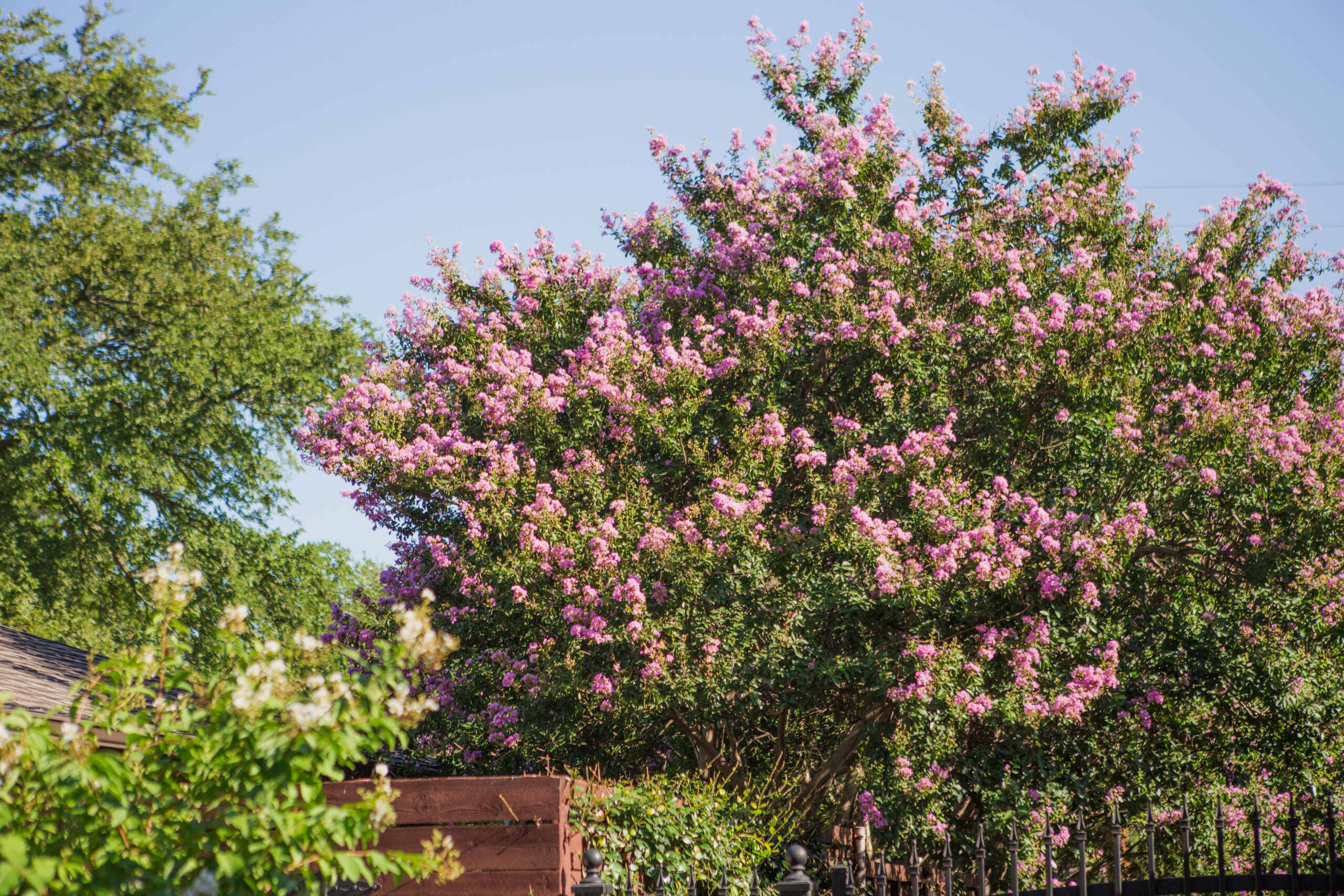
Crape myrtles are a favorite across the Dallas-Fort Worth area thanks to their vibrant summer blooms, adaptability, and long season of interest. While these trees are relatively low maintenance, a few region-specific care practices can make a meaningful difference in their health and appearance. Use the tips below to help your crape myrtles grow strong and perform their best year after year.

1. Select the Right Planting Location

Crape myrtles thrive in full sun. Choose a planting site that receives at least six hours of direct sunlight each day to encourage healthy growth and abundant blooms. Too much shade can lead to fewer flowers and leggy growth. South- and southeast-facing exposures are ideal, though not required.  

2. Manage Size Without Over-Pruning

There are hundreds of crape myrtle varieties available, ranging from compact shrubs under three feet tall to large trees exceeding 20 feet. Popular larger and mildew resistant cultivars include ‘Natchez’, Muskogee’ and ‘Tuscadora’, along with dwarf varieties such as the Black Diamond® series. Selecting a variety suited to your space helps reduce the need for pruning and supports long-term tree health.

3. Provide Well-Draining Soil

While crape myrtles adapt to many soil types, they perform best in well-draining soil. Clay, sand, and limestone soils can all be improved by incorporating organic matter such as compost. These amendments enhance drainage and soil fertility. Crape myrtles prefer slightly acidic to neutral soils but can tolerate higher alkalinity when drainage is adequate.

4. Water Wisely

Consistent watering is essential during the first few years while the tree becomes established. After that, crape myrtles can tolerate drought, but regular deep watering during extended dry periods promotes strong root systems and overall vitality.
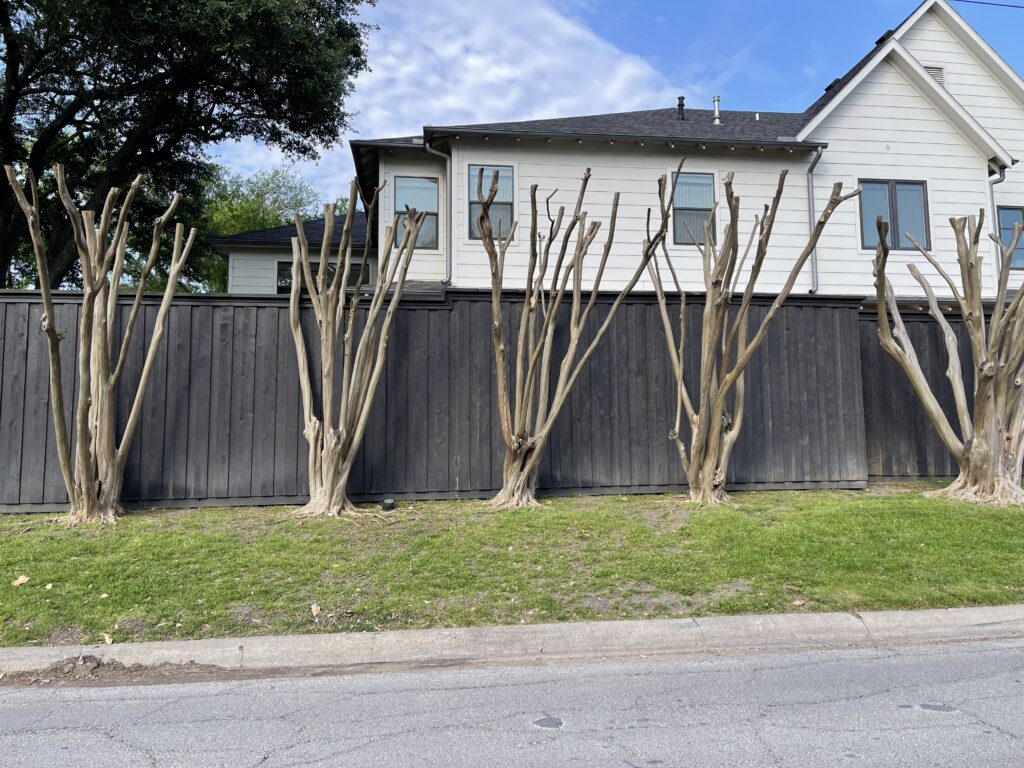
The practice of topping trees often comes from an uninformed and misguided attempt to avoid limb breakage, stimulate new growth, and control the size and shape of trees, but topping trees causes more problems than it solves.

5. Prune for Health and Blooms

Prune only as needed in late winter or early spring. Focus on removing dead, damaged or crossing branches, improving air circulation, and maintaining proper clearance near structures or walkways. Avoid heavy pruning or a practice known as ‘topping‘, as it can weaken the tree and reduce flowering.

6. Fertilize in Moderation

Healthy soil does much of the nutrient work on its own, especially when organic matter is regularly added. If a soil test shows deficiencies, apply a balanced, slow-release fertilizer according to label directions. Avoid over-fertilizing, which can lead to excessive growth and increased pest activity.

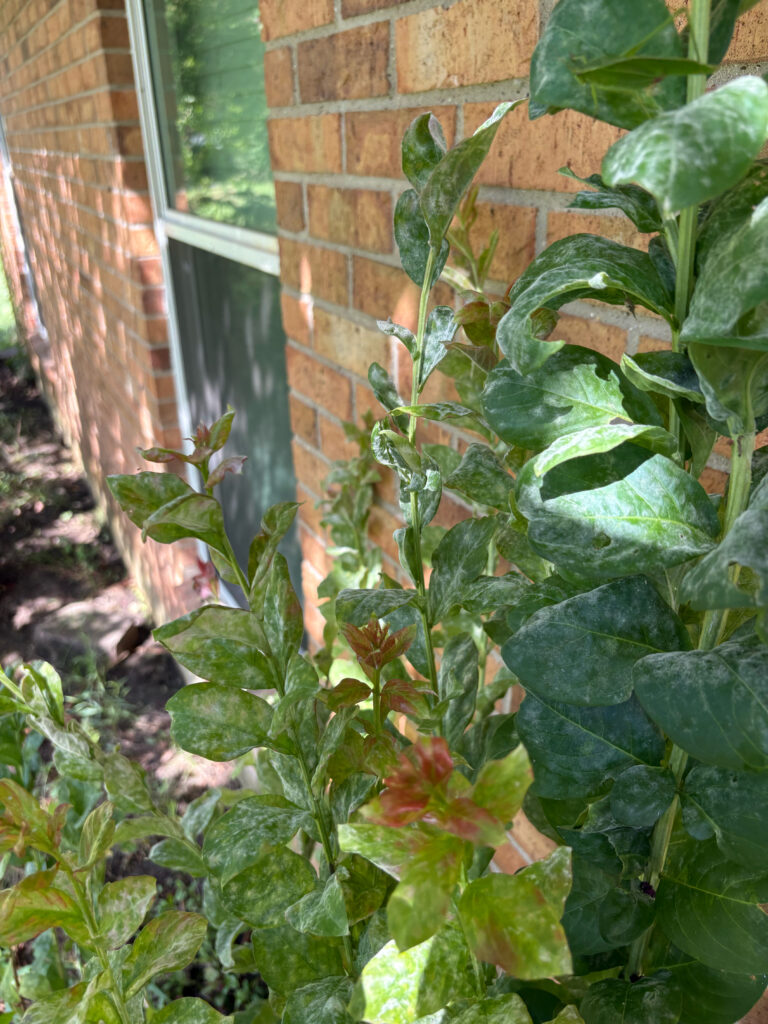
Lady beetles (ladybugs) are a good natural control for aphids and scale. Here, the white patches are scale.
Crepe myrtle, crape myrtle, with black mold
Crape myrtle, crepe myrtle with insect and disease

7. Watch for Common Pests

Aphids and scale insects are the most common pests affecting crape myrtles. Routine inspections help catch issues early. Beneficial insects, such as ladybugs and lacewings, often provide effective natural control. Managing plant stress through proper watering and soil care is the first step before considering treatments.

8. Promote Disease Resistance

Powdery mildew is a common issue with crape myrtles, particularly during moist, spring weather. Healthy trees often recover on their own. Improving air circulation through selective pruning and avoiding overhead watering can help limit disease pressure.

9. Mulch for Moisture and Soil Health

Apply a layer of organic mulch around the base of the tree to conserve moisture, regulate soil temperature, and suppress weeds. As mulch breaks down, it also improves soil quality – an added benefit during North Texas summers. 

We love Trees Texas Tree Surgeons Logo

Crape myrtles are a beautiful and important part of Arlington’s urban forest. While officially the Texas State “Shrub,” crape myrtles are versatile trees that come in many sizes and varieties. We have several blogs on crape myrtles / crepe myrtles to help homeowners with multiple questions surrounding care for them.
Share This Blog
PREV BLOG

Search Within Blogs

Recent Posts

  • Choosing the Right Mulch
    You might say we are obsessed with mulch, and you wouldn't be wrong. Don't underestimate this tree super food. […]
  • Yaupon Holly shapedIs it a Tree or a Shrub?
    The question is actually; what role do you want the woody plant to play (shade or privacy), and how much space do you have for it to grow? […]
  • Children’s Health Presented with Tree Campus Recognition from Arbor Day Foundation
    Trees uplift communities—whether in hospitals, schools, utility corridors, or university quads. The Arbor Day Foundation offers tailored recognition programs that honor institutions of all types for their commitment to green and healthy spaces. […]
  • Pre-Emergent vs. Post-Emergent Weed Control | A Tree-Focused Perspective
    When using weed control treatments does the affects of pre-emergent or post-emergent interact with trees differently? […]
  • Lacebark Elm and Borers
    Our certified arborists have been noticing a significant amount of lacebark elms with borer activity this past week. If you believe your tree is showing symptoms of stress contact us to schedule an assessment. […]

Ask Texas tree Surgouns

  • Tree Species
  • News Coverage
  • What's Wrong with My Tree
  • Local Arborist Services
  • Consulting
  • Tree Planting
  • Tree Removal
  • Tree Trimming
  • Tree Health Care
  • Roots
  • Insects & Diseases
  • Tree Recommendations
  • Turf & Trees
  • Extreme Weather
  • Fall Tree Care
  • Spring Tree Care
  • Summer Tree Care
  • Winter Tree Care
  • Top 10
  • Resources
  • Tree Owner's Guide
  • Ask Texas Tree Surgeons
  • Events
  • Video

Follow

Recent Comments

    Archives

    • May 2026
    • April 2026
    • March 2026
    • February 2026
    • January 2026
    • December 2025
    • November 2025
    • October 2025
    • September 2025
    • August 2025
    • July 2025
    • June 2025
    • May 2025
    • April 2025
    • March 2025
    • February 2025
    • January 2025
    • December 2024
    • November 2024
    • October 2024
    • September 2024
    • August 2024
    • July 2024
    • June 2024
    • May 2024
    • April 2024
    • March 2024
    • February 2024
    • January 2024
    • December 2023
    • November 2023
    • October 2023
    • September 2023
    • August 2023
    • July 2023
    • May 2023
    • February 2023
    • October 2022
    • September 2022
    • August 2022
    • May 2022
    • April 2022
    • March 2022
    • February 2022
    • January 2022
    • October 2021
    • September 2021
    • July 2021
    • June 2021
    • May 2021
    • March 2021
    • February 2021
    • January 2021
    • December 2020
    • November 2020
    • October 2020
    • August 2020
    • June 2020
    • April 2020
    • March 2020
    • February 2020
    • January 2020
    • December 2019
    • November 2019
    • October 2019
    • September 2019
    • August 2019
    • July 2019
    • June 2019
    • May 2019
    • April 2019
    • March 2019
    • February 2019
    • December 2018
    • November 2018
    • October 2018
    • September 2018
    • August 2018
    Related

    Related Blogs

    Similar blogs related to this topic
    All Blogs
    What's Wrong with My Tree

    Lacebark Elm and Borers

    In North Texas our local Certified Arborists have been seeing several Lacebark Elms dead with borer exit holes in the past week. Borers Target Already Stressed Trees The borers we are seeing in Lacebark Elms…

    Read more Apr 17, 2026
    Tree Species

    Why Oak Wilt is Especially Devastating on Red Oaks 

    Oak wilt is one of the most serious tree diseases we see in North Texas. While all oak trees are susceptible, red oaks are especially vulnerable and often decline much faster than other oak species.…

    Read more Apr 06, 2026
    What's Wrong with My Tree

    Why Are My Oaks Producing so Many Acorns?

    Are you noticing your lawn has a sudden carpet of acorns beneath your feet? If yes, you’re likely experiencing a masting year. In such years, oak trees pull out all the stops to produce an…

    Read more Oct 17, 2025
    Contact Us

    Get Your Estimate Today!

    Ready to get started? Have a question? We’d love to hear from you. Request an estimate and get started today.

    Contact Us
    Locations

    Areas Served

    Tree Services in and around the Dallas-Fort Worth Metroplex.

    • Dallas
    • Grand Prairie
    • Plano
    • Denton
    • North Richland Hills
    • Southlake
    • Fort Worth
    • Lewisville
    • Carrollton
    • Highland Park
    • Euless
    • Colleyville
    • Arlington
    • Frisco
    • McKinney
    • Grapevine
    • Garland
    • Wylie
    • Irving
    • Richardson
    • Coppell
    • Mesquite
    • Farmers Branch
    • Flower Mound
    • Keller
    • Addison
    • Rockwall
    • Prosper
    • Allen
    • Murphy
    • University Park
    • Trophy Club
    view more
    footer logo

    Dallas Tree Surgeons or Texas Tree Surgeons? Both! Same great people. Different name.

    • 469-387-6000
    • [email protected]
    Services
    • All Services
    • Local Arborist
    • Tree Health Care
    • Tree Removal
    • Tree Trimming
    • Tree Planting
    • Stump Grinding
    Quick Links
    • About
    • Contact Us
    • Faqs
    • Privacy Policy
    • Terms and Conditions
    Follow us on

    "Dallas Tree Surgeons" and "Texas Tree Surgeons" are registered marks of Tree Surgeons LLC.

    Copyright ©2018-2024 Tree Surgeons LLC

    Stay Connected With Texas Tree Surgeons

    * indicates required
    🇺🇸
    Texas Tree Surgeons - By providing your phone number and checking the box, you agree to receive promotional and marketing messages, notifications, and customer service communications from Texas Tree Surgeons. Message and data rates may apply. Consent is not a condition of purchase. Message frequency varies. Text HELP for help. Text STOP to cancel. See Terms and Privacy Policy
    Submitting...