Why Are My Oaks Producing so Many Acorns?
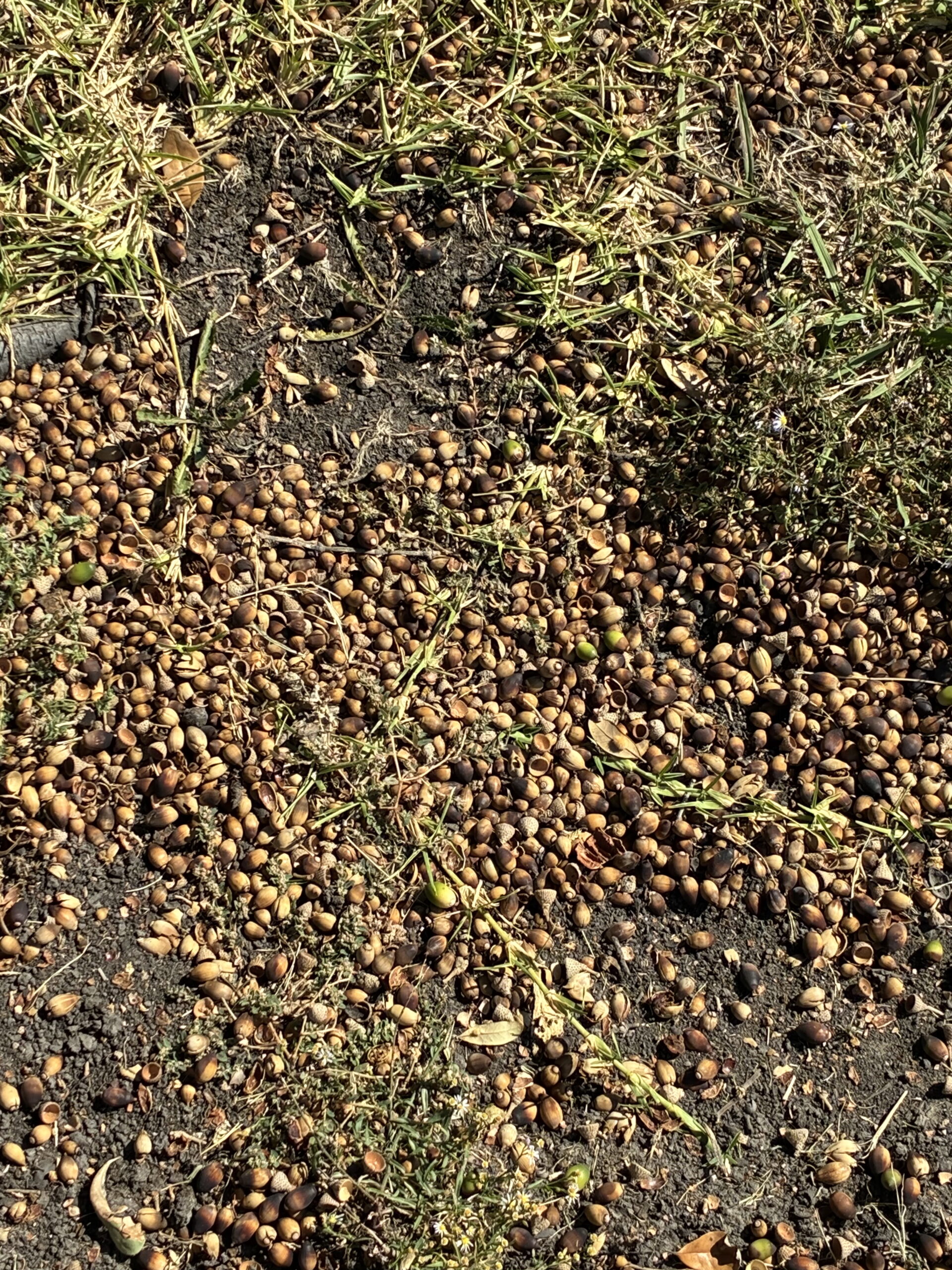
Are you noticing your lawn has a sudden carpet of acorns beneath your feet? If yes, you’re likely experiencing a masting year. In such years, oak trees pull out all the stops to produce an exceptional number of acorns. But why does this happen? Can you stop this from happening?
What is ‘Masting’ and How Does it Affect Acorn Abundance?
Masting is a natural phenomenon where trees produce a large number of seeds simultaneously at irregular intervals. This strategy can help ensure species survival by overwhelming predators.
During a mast year, trees can produce thousands more seeds than usual, a process that exhausts their resources but significantly increases the odds of seed germination success. This event doesn’t occur annually but in a cycle which might range from two to eight years, depending on environmental factors. During these years, oak trees synchronize their seed production, which can lead to an overwhelming abundance of acorns.
Masting is not limited to oak trees; many forest species utilize this tactic to manage predator populations and ensure continued growth and reproduction across generations.
Factors Triggering a Masting Year
Several factors can trigger a masting year. Weather conditions, such as a cold winter followed by a warm spring, can influence acorn production. Nutrient availability can also play a crucial role in determining the frequency of mast years. Trees may use years with favorable climatic conditions to stockpile resources and release them during masting.
What Role Do Climate Conditions Play?
As stated above, weather conditions such as temperature and rainfall during the flowering and fruiting season significantly impact acorn production. Warm, wet springs can lead to a bumper crop.
During particularly rainy seasons, the soil moisture level increases, providing trees with the hydration needed for robust growth and acorn development. Conversely, harsh drought conditions can limit acorn production by stressing the trees and decreasing the overall yield.
Climate change is also a contributing factor to variable acorn production. As global temperatures rise, the flowering season for oak trees can be affected, modifying how and when acorns are produced.
Why Do Oaks Choose Masting as a Strategy?
Masting is thought to be a survival strategy. By producing many acorns simultaneously, oak trees ensure that even if many acorns are eaten by animals, enough survive to grow into new trees. This phenomenon overwhelms predators, such as squirrels and birds, ensuring that some seeds escape being eaten and have a chance to germinate.
The unpredictability of masting years is key to its success as a strategy. Predators cannot increase their population sizes consistently in anticipation of every masting event, which gives trees an edge in increasing seedling survival rates. Such synchronized, massive seed production also discourages dependence by predators over time.
In addition to overwhelming seed predators, masting can help in maintaining and expanding the genetic diversity of new seedlings. When oak trees produce acorns in large numbers, there is a higher likelihood for cross-pollination between different trees, which aids in the propagation of varied genetic traits essential for resilience and adaptation.
How Does Tree Age and Health Affect Acorn Output?
Healthy, mature oak trees are more likely to produce a larger quantity of acorns. Stress factors such as disease or environmental stress can reduce acorn production.
Young oak trees typically produce fewer acorns compared to their mature counterparts. As trees age, they reach a peak production period where their acorn output maximizes, contributing to the cyclical nature of acorn abundance.
Understanding the reason behind masting years gives us deeper insight into the intricate balance of nature. Oaks producing more acorns in specific years aren’t just random events but are well-strategized survival tactics honed over millennia.

 PREV BLOG
Related Blogs
Similar blogs related to this topic

Top 10 Reasons Why Your Tree is Dying
Trees are tougher than they look, but even healthy trees can struggle when stress builds over time. In North Texas, factors such as drought, poor soil conditions, root damage, pests, and improper maintenance can gradually…
Read more
Leaning Trees Post Heavy Rain
Heavy rain followed by long period of drought can cause significant shifting in our soils. This can be concerning for trees that have shallow roots. Heavy Rain Doesn’t Mean Tree Failure Healthy trees that are structurally…
Read more
Is There Anything you can do to Correct Compaction Issues Caused by Construction?
Correcting soil compaction requires a combination of physical loosening of the soil (aeration), biological improvement (microorganisms), continued protection. Vertical Mulching Mechanical / Physical Solutions Mechanical/Physical solutions are usually the quickest way to break up severely…
Read more