How to Treat Fireblight Disease in Arlington
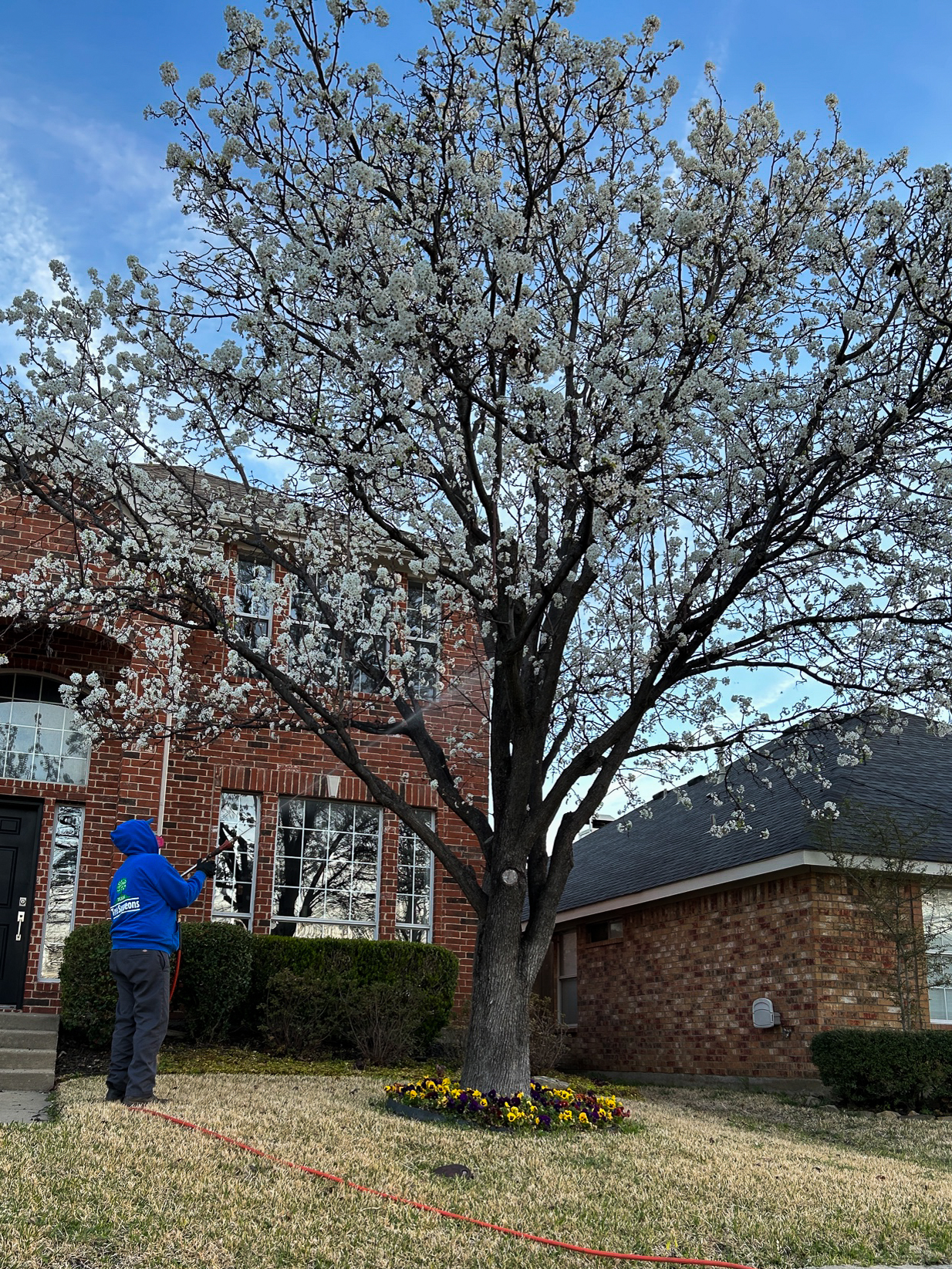
Fireblight is a common yet destructive bacterial disease affecting various species of fruit trees in Arlington. It’s essential to identify it early and take action to prevent its spread. In Arlington we really only see this disease attack Bradford pear trees (Pyrus calleryana ‘Bradford’).
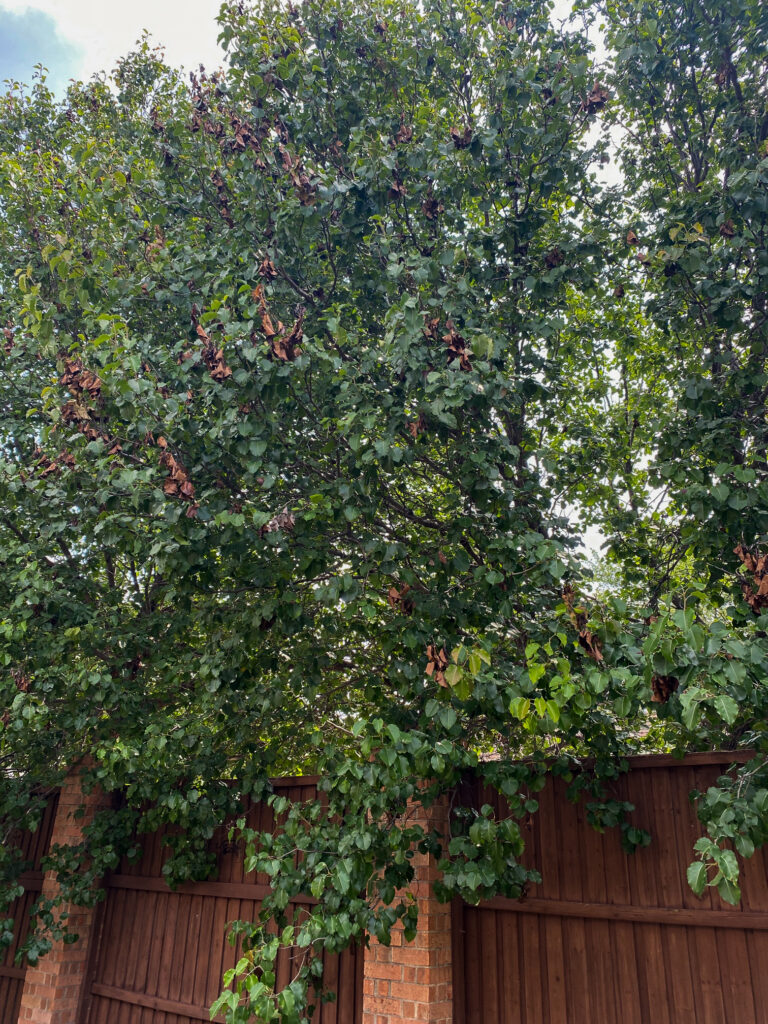
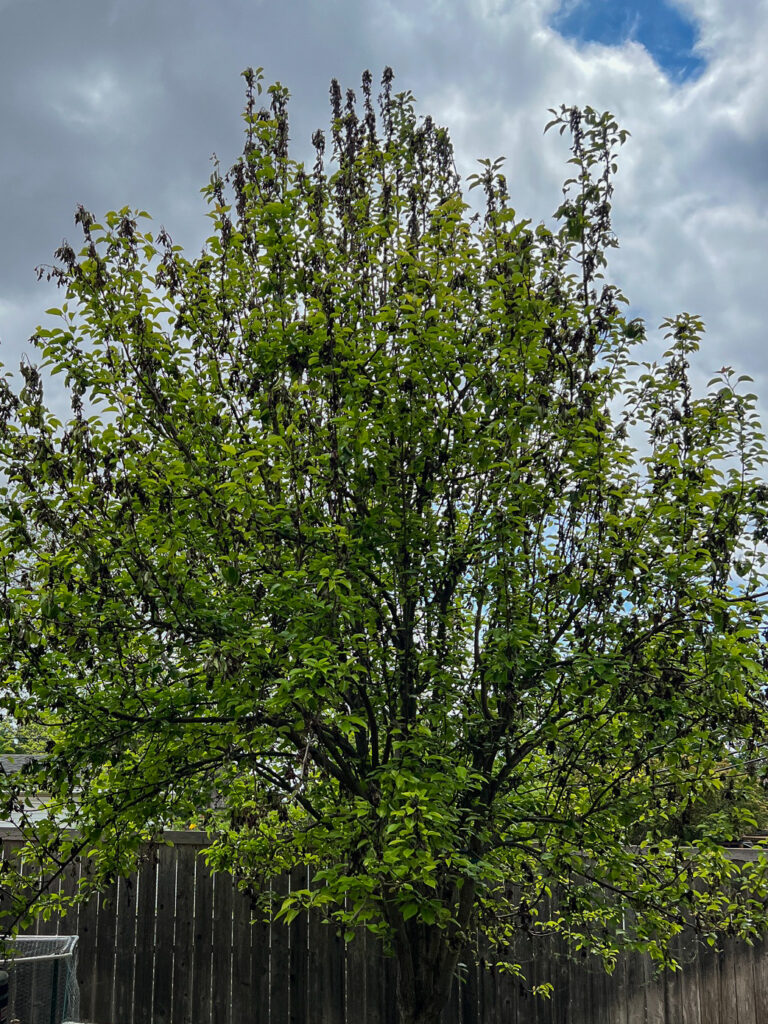
Fireblight Red Flags
- Flowers that appear ‘water-soaked’
- Blackening of leaf tissue
- Wilted new shoots
- Blackened twigs that curl downward
- Scorched appearance
- Oozing cankers on stems
What is Fireblight?
Bacterial infection that impacts plants in the rose family, commonly apple and pear trees. Globally it can have a significant impact on crops, but locally we have occasional infections breakout in the Bradford pear species.
Fireblight spreads through bacteria, often introduced by insects or rain. The primary culprit for spreading the bacterium, Erwinia amylovora, which thrives in warm, humid environments and spreads to trees through natural vectors. Exposure through wounds or natural openings in a plant can easily succumb to infection, which is why garden hygiene is vital.
Environmental conditions heavily influence the spread of fireblight. During warm, wet springs, or after severe thunderstorms, the disease can spread rapidly through infected water droplets or wind. This knowledge is critical for preventative measures, such as using barrier methods to intercept water-borne bacteria.
How a Texas Tree Surgeons ISA Certified Arborist Diagnosis Fireblight
- Trained local Arlington arborists can visibly diagnose by observation of symptoms and sometimes signs during active infections.
- Confirmation of diagnosis can be accomplished by lab testing.
How Texas Tree Surgeons Treats Fireblight
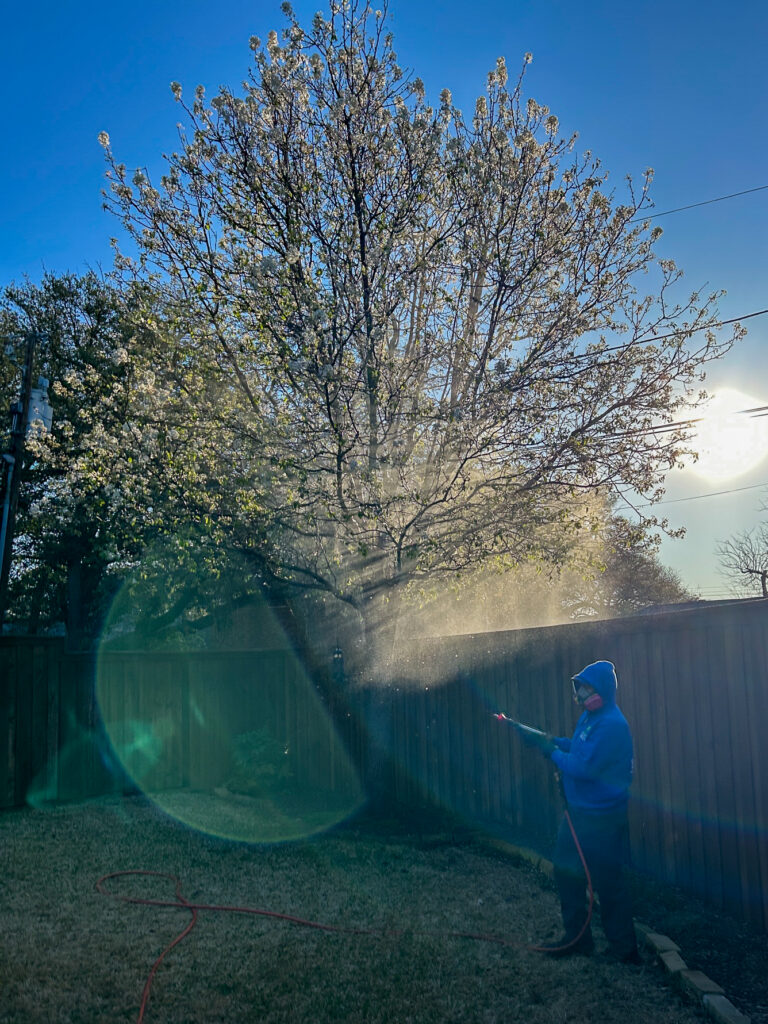
At Texas Tree Surgeons we treat for fireblight when Bradford trees are beginning to break bud. Timely application during this stage is critical to reducing the risk of infection as the trees move into bloom. Application occurs twice within a small range of time. Sadly, once a larger tree shows the signs of fireblight, there is very little that can be done to immediately suppress it. Fireblight is a bacterial disease that can only be managed, not cured. Smaller trees can benefit from winter sanitation pruning.
Proper pruning is essential to managing fireblight. Cutting away infected branches can prevent the spread of bacteria. Beyond immediate disease control, proper pruning establishes a healthier overall tree structure, promoting longevity.
What can Homeowners do to help their trees with Fireblight?
Healthy trees are more resilient to diseases. Fertilizing in moderation with a balanced nutrient mix can enhance your tree’s natural defenses. Regularly assessing soil health ensures your trees get the nutrients they need. A well-nourished tree can better sustain minor injuries or stress factors which would otherwise make it susceptible to diseases like fireblight.
Incorporating organic matter like compost or mulch into your soil health program can improve its fertility and structure, boosting tree vigor. These organic additions not only supply essential nutrients but also enhance soil microorganisms that can naturally suppress pathogenic bacteria. Alongside nutrients, consistent and proper watering is vital, especially in drought conditions which can stress trees and increase vulnerability to infections. Good irrigation practices contribute to the robust health of trees, which is a frontline defense against fireblight. This includes avoiding sprinklers on trees when they are flowering to reduce spread. As always drip irrigation is preferred since sprinklers are designed for sod, not trees.
What Will Happen to My Tree with Fireblight?
Bradford pears are fairly resistant to fireblight, proper management practices are ideal for longevity. Many can survive fireblight infections indefinitely if vigor good
What species are Texas Tree Surgeons arborists seeing this effect?
- Bradford pear trees (1st)
- Fruiting pears and apples (2nd)
- Cotoneaster and pyracantha (less likely)

At Texas Tree Surgeons we love trees. We strictly use only scientifically backed solutions in tree health care and management. If you are concerned about the health of your tree schedule a consultation with a Texas Tree Surgeons Certified Arborist today. Let’s build a long-term care plan to renew your landscape.
 PREV BLOG
Related Blogs
Similar blogs related to this topic
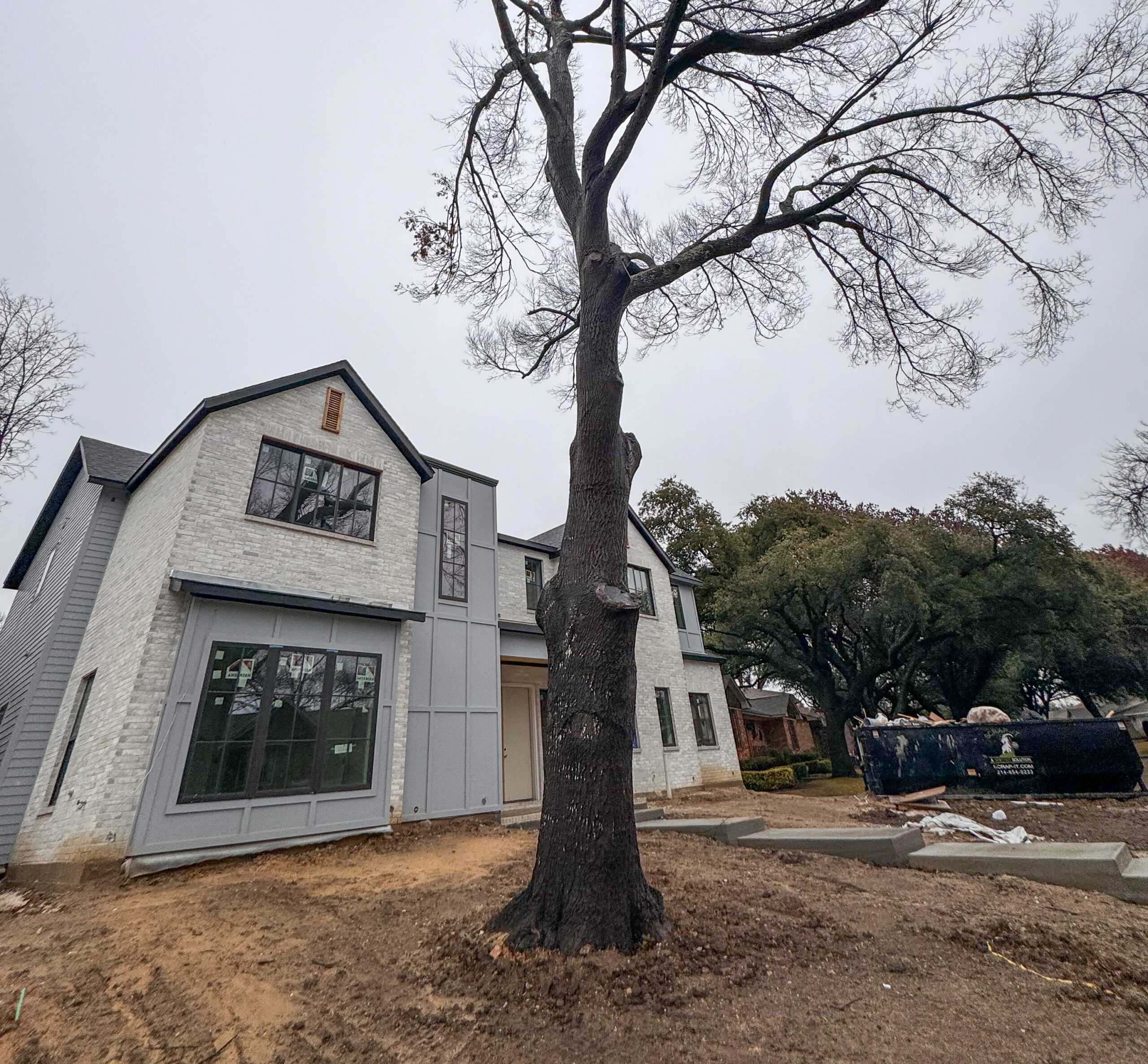
Avoid Costly Mistakes with Your Trees During Construction Projects
When planning for a rebuild or renovation of your home one thing that consistently gets overlooked is proper tree protection. Trees are living organisms that need to be protected and accounted for prior to construction…
Read more
The Dallas Morning News | Constant State of Stress
We spoke with The Dallas Morning News about heat stress and what North Texans can do to help their trees recover. “Here in Texas, we go through these droughts all the time,” King said. “This…
Read more
Why do Some Live Oak Produce Root Sprouts and What to do About it?
Root sprouts, sometimes referred to as suckers, are new growths that emerge from the roots of Live Oaks. These are typically a response to certain environmental conditions or stress factors that the tree is experiencing.…
Read more