• Skip to main content
  • 469-387-6000
  • [email protected]
  • Local Arborist
  • Services

    All Services

    Local Arborist

    Consulting

    Tree Trimming

    Tree Removal

    Tree Health Care

    Tree Planting

    Stump Grinding

  • Service Area
    Addison Allen Arlington Carrollton Colleyville Coppell Dallas Denton Euless Farmers Branch Flower Mound Fort Worth Frisco Garland Grand Prairie Grapevine Highland Park Irving Keller Lewisville McKinney Mesquite Murphy North Richland Hills Plano Prosper Richardson Rockwall Southlake Trophy Club University Park Wylie
  • Information
    About How We Work Faqs “Arborist” vs. “Certified Arborist” Emergency Tree Work Gallery Insurance and W9 Information
  • Testimonials
  • Blog
    All Blog North Texas Tree Owner’s Guide Tree Recommendations Insects & Diseases Whats Wrong with My Tree Fall Tree Care Winter Tree Care Spring Tree Care Summer Tree Care
  • Pay Invoice
  • Contact Us
  • Local Arborist Services
  • Tree Removal
  • Resources

Emergency Tree Services: A Guide to Safety and Recovery
Aug 05, 2026

Hearing a tree crash onto your home is a frightening experience. In the aftermath, it can be difficult to think clearly or know what to do next. While the situation may feel overwhelming, taking a calm, step-by-step approach can help protect your family, limit further damage, and support smoother recovery.

Prioritize Immediate Safety

Your first priority is the safety of everyone in the home. If a tree has struck the structure, evacuate immediately and move to a safe location away from the damaged area.

Do not re-enter the home until it has been evaluated for potential hazards. Be alert for dangers such as downed electrical lines, damaged electrical systems, broken glass, structural instability, or the smell of natural gas. If you suspect a gas leak or electrical hazard, contact emergency services and the appropriate utility provider immediately.
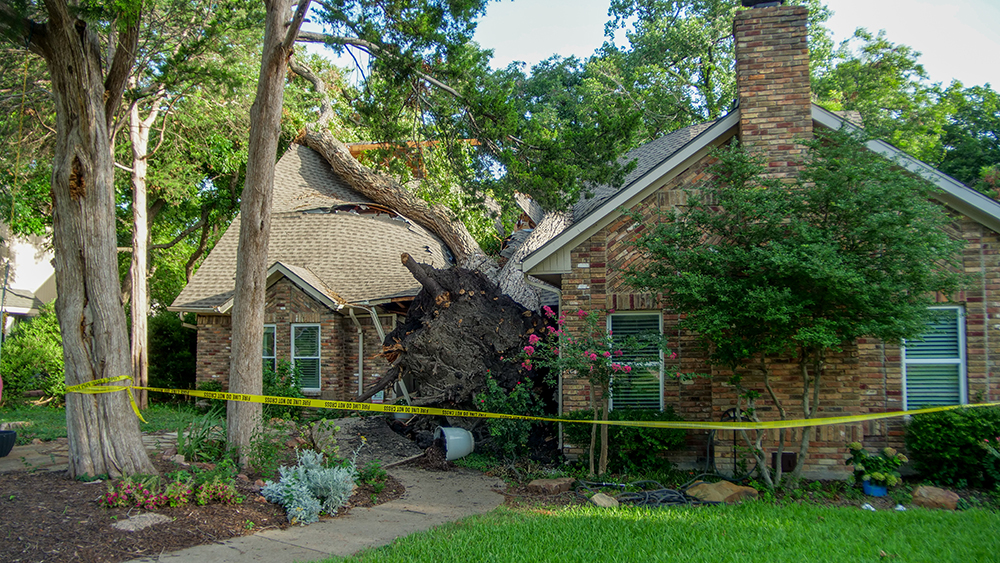
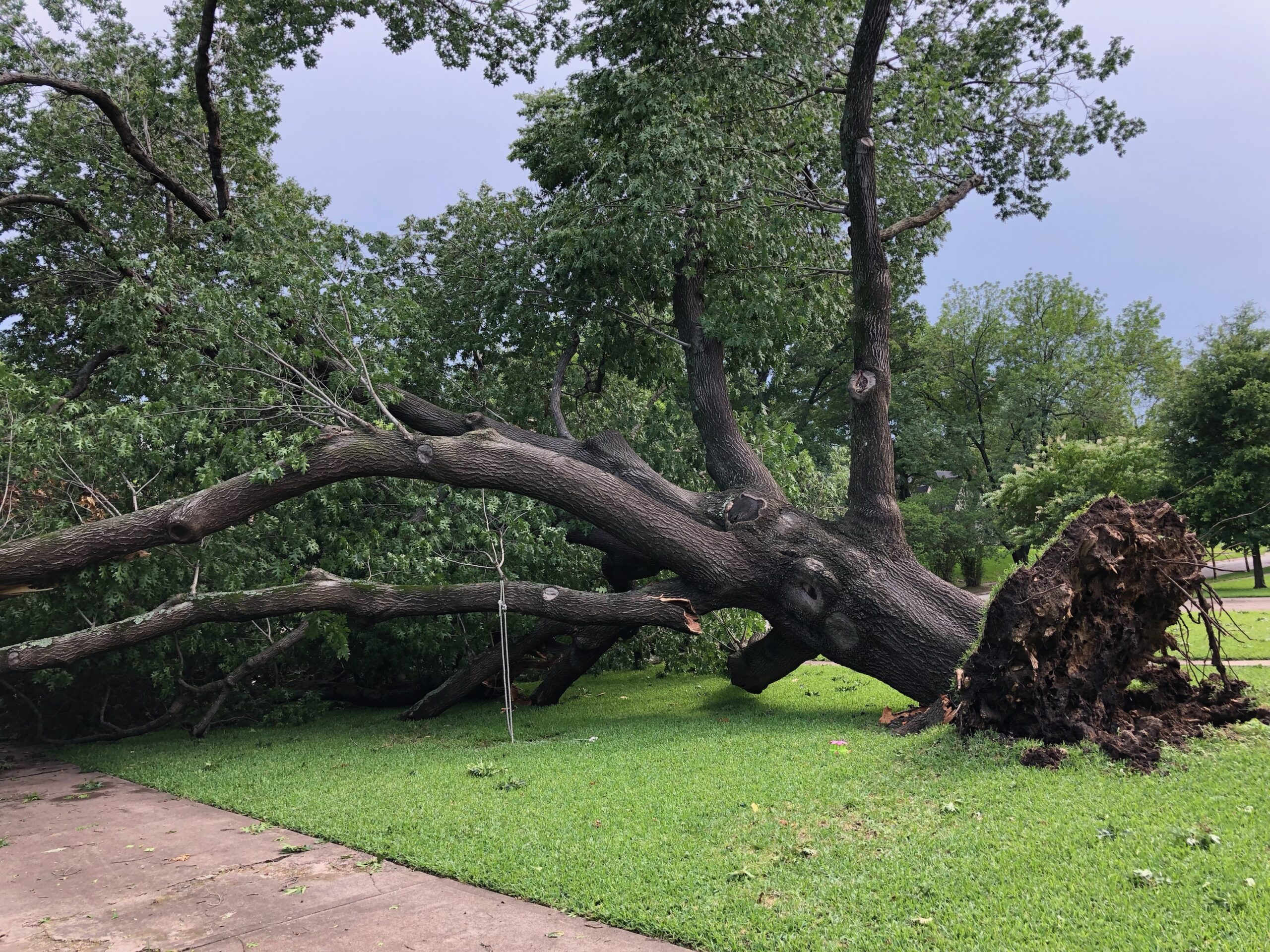
Large Pecan tree failed during a storm, you can see the roots have been uplifted and severed.

Assess the Damage from a Safe Distance

Once everyone is safe, conduct a visual assessment from outside the affected area. Avoid climbing onto the roof, moving debris, or entering damaged portions of the structure.

Look for signs of:

  • Roof damage or sagging
  • Cracked walls or ceilings
  • Damaged support members
  • Broken windows and doors
  • Leaning chimneys or exterior walls
  • Utility disruptions

Take photographs from multiple angles. Thorough documentation can assist insurance providers, contractors, and arborists throughout the recovery process.
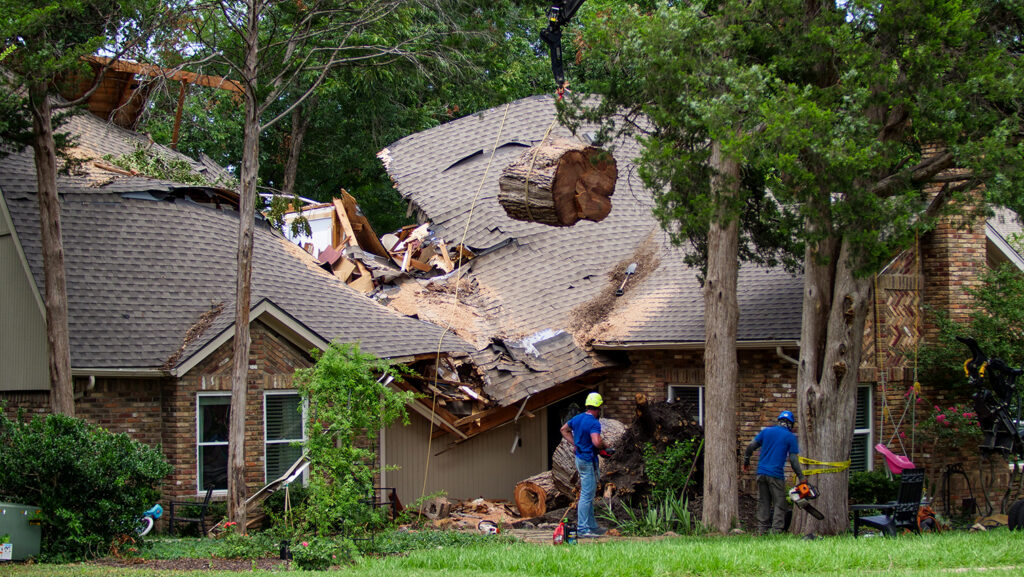
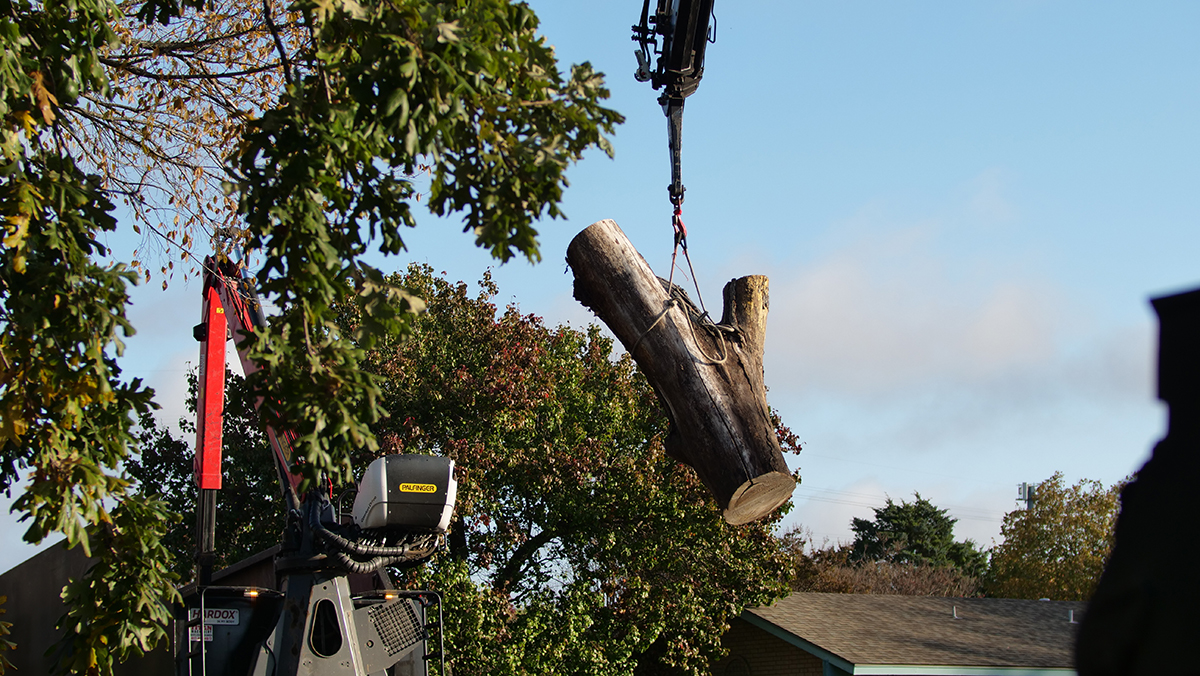
Cranes are used when trees are deemed too unsafe to climb. Crane usage also expedites the work, where climbers would take days to remove, a crane can get the tree removed with in 6 hours.

Contact a Qualified Emergency Tree Service 

A tree resting on a structure creates complex and often unpredictable hazards. Broken limbs, compromised stems, and shifting weight can pose serious risks that may not be immediately visible.

Contact a reputable tree care company with emergency response experience. Ideally, the company should employ ISA Certified Arborists and crews trained in professional arboricultural safety practices.

Be prepared to provide:

  • Your location
  • Tree size and species, if known
  • Whether utilities are involved
  • The extent of visible damage
  • Any immediate safety concerns

Prompt professional assessment can help stabilize the site and prevent additional property damage.
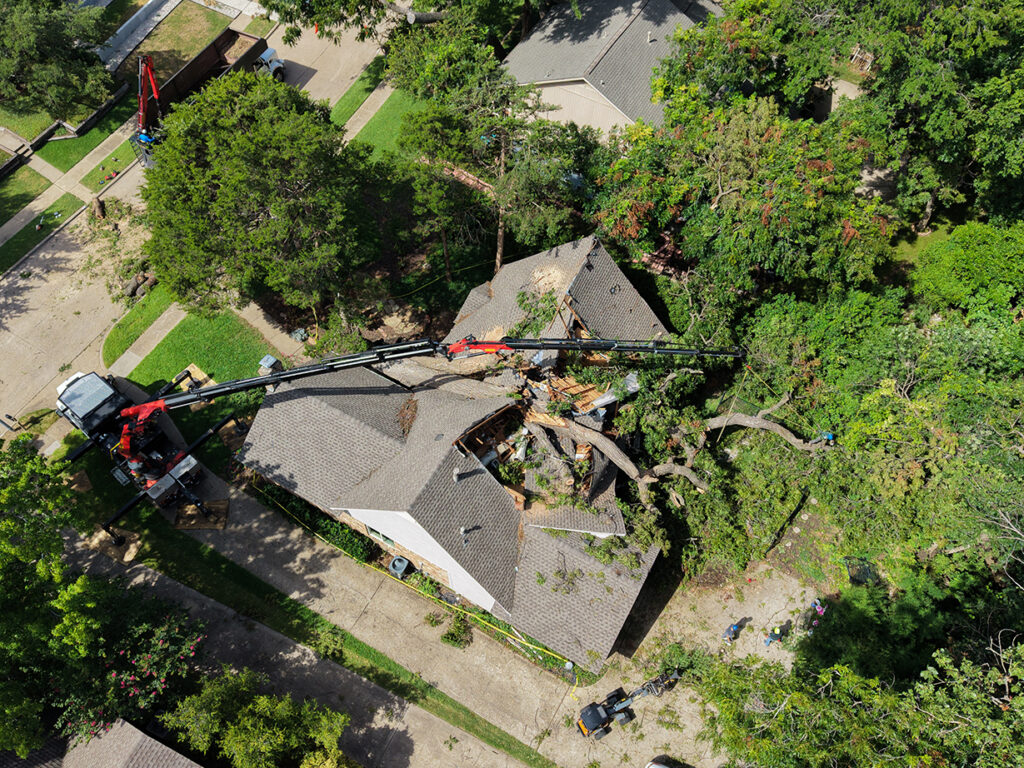
Prompt professional assessment can help stabilize the site and prevent additional property damage.

Notify Your Insurance Provider

Contact your insurance company as soon as practical after the incident.

Keep records of:

  • Photographs and videos
  • Emergency service invoices
  • Tree removal estimates
  • Temporary repair costs
  • Communication with contractors and adjusters

Organized documentation can help streamline the claims process and reduce delays.
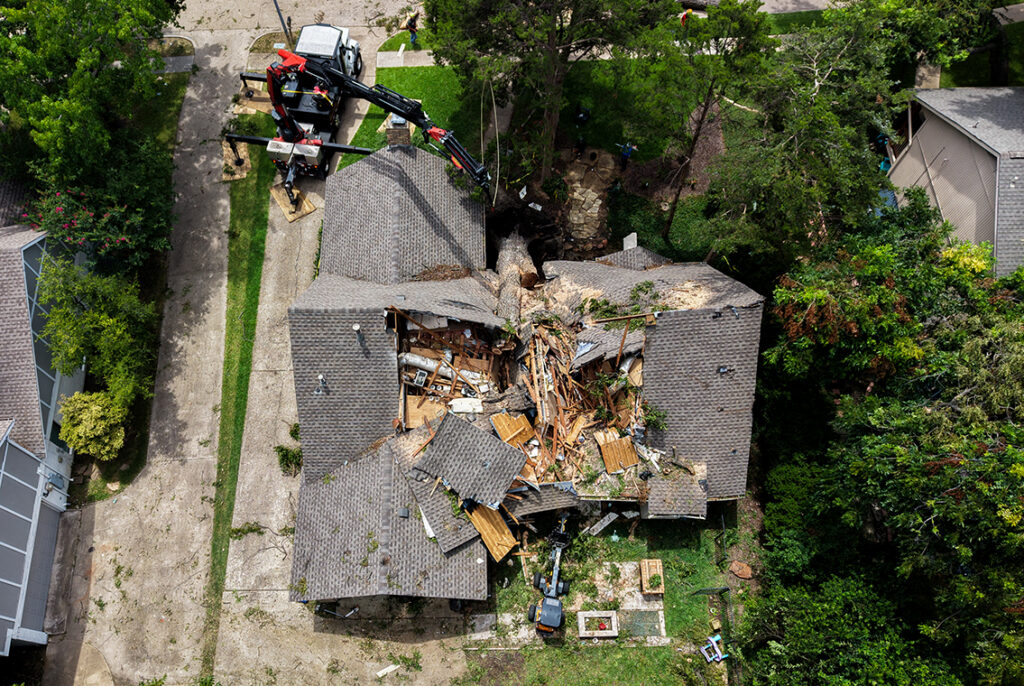
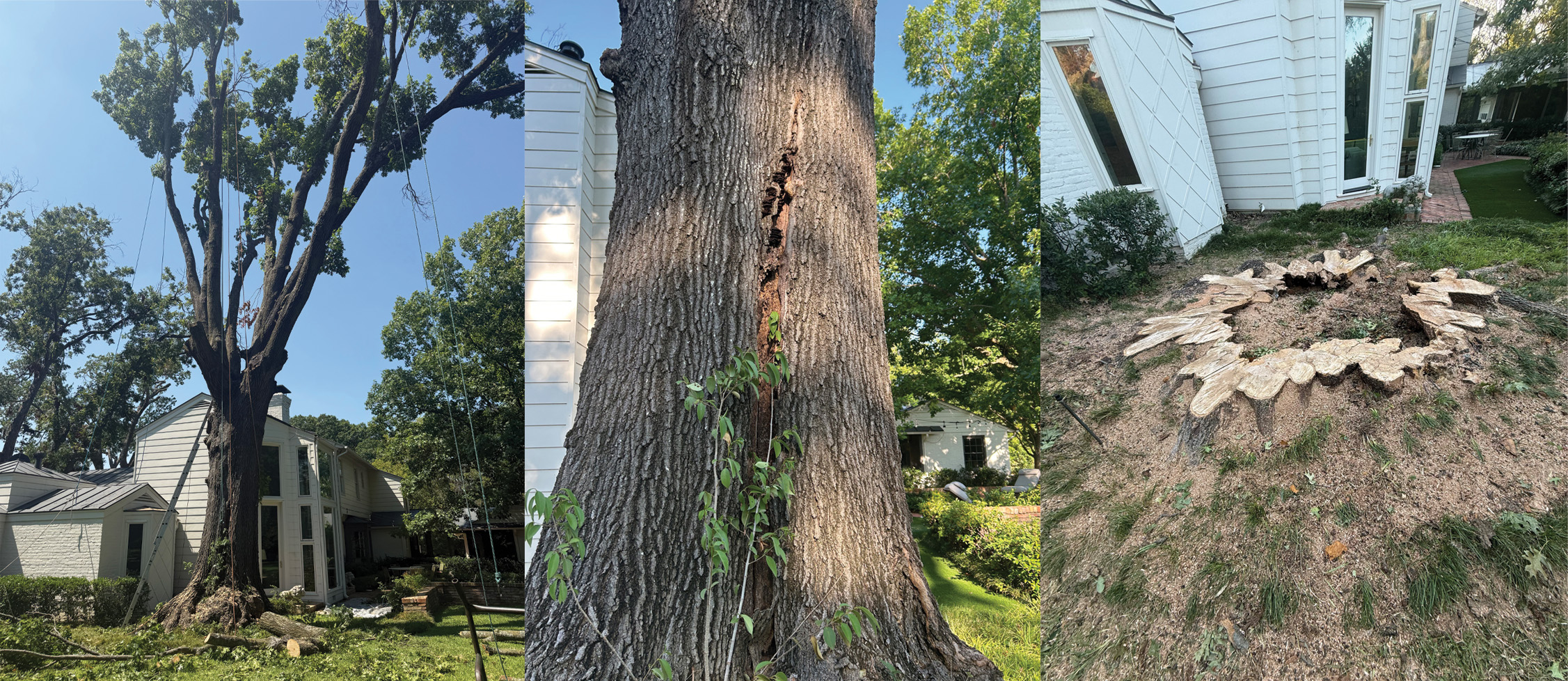
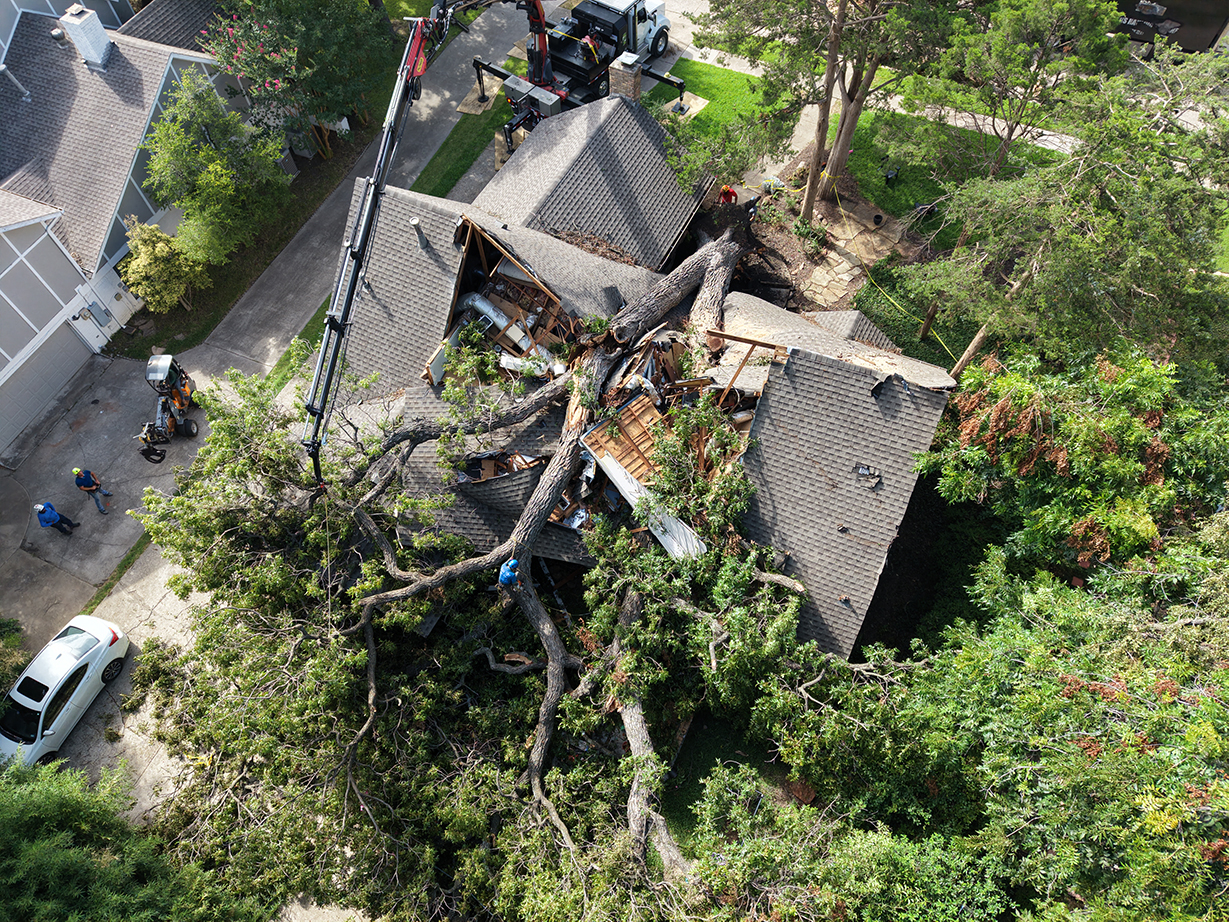
Arial view of damage from a Pecan tree failing during a storm.

Understanding Emergency Tree Removal

Removing a tree from a damaged structure is rarely straightforward. The goal is not to simply remove the tree, but to do so while minimizing risk to people and property.

Before removal begins, arborists evaluate factors such as:

  • The point of failure
  • Weight distribution and load paths
  • Structural stability of the home
  • Utility hazards
  • Weather conditions
  • Equipment access limitations

Depending on the situation, removal may involve climbing, aerial lifts, riggings systems, cranes, or a combination of specialized techniques. Proper planning is essential, as damaged trees often contain hidden forces that can shift unexpectedly during removal.
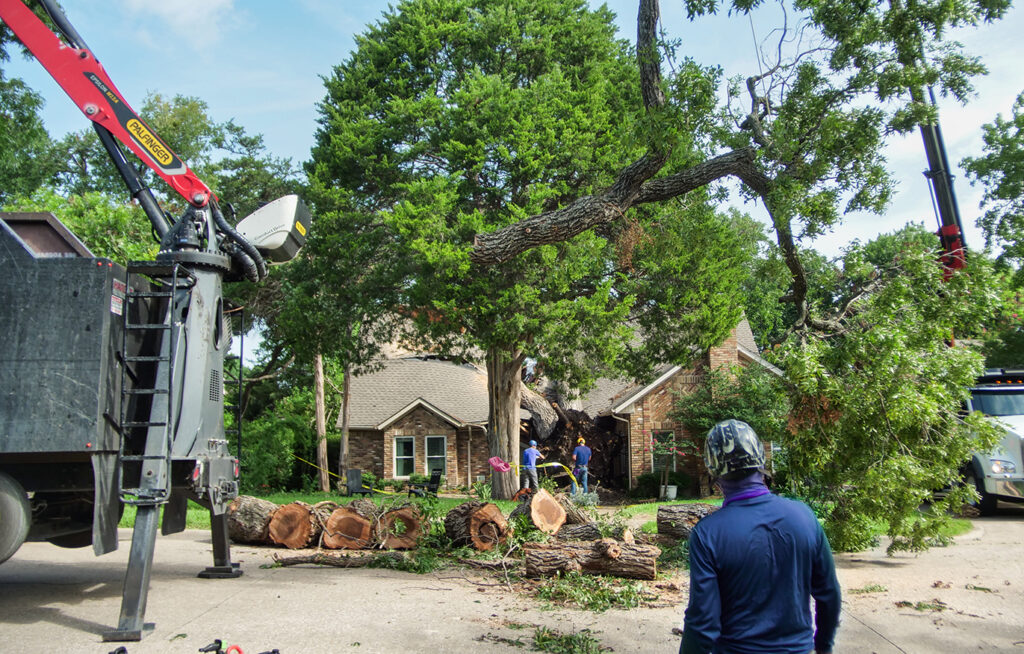
Tree Emergency 101. Prioritize safety, document the damage, contact qualified professionals, and work closely with your insurance provider.

Mitigating Future Risk

After emergency work is completed, consider having the remaining trees on your property evaluated by a qualified arborist.

A professional assessment can identify:

  • Dead or declining trees
  • Structural defects
  • Weak branch attachments
  • Root related concerns
  • Storm damage
  • Opportunities for preventative pruning

Routine inspections and maintenance can help identify concerns early and potentially reduce the likelihood of future tree failures.

Don’t Let One Tree Failure Define All Trees

When a large tree falls, it is natural to question the safety of every tree nearby. However, a single failure does not mean all mature trees present unacceptable risk.

Healthy, properly maintained trees provide numerous benefits, including:

  • Shade and energy savings
  • Improved air quality
  • Stormwater management
  • Wildlife habitat
  • Improved mental and physical wellbeing
  • Enhanced property values

Rather than removing trees out of fear, focus on professional evaluation and appropriate maintenance. Risk can often be managed while preserving the many benefits mature trees provide.

Moving Forward Safely

Recovering from a tree-related emergency can be stressful, but the right response can make the process more manageable. Prioritize safety, document the damage, contact qualified professionals, and work closely with your insurance provider.

We love Trees Texas Tree Surgeons Logo

At Texas Tree Surgeons we love trees and our community. When emergencies occur, we’re here to help with trusted expertise, professional care, and a focus on protecting both people and property. Through preventative tree care and guidance from qualified arborists, homeowners can manage risk while preserving the long-term value of healthy trees. For emergency services, consult our team by reaching us here.
Share This Blog
PREV BLOG

Search Within Blogs

Recent Posts

  • The Role of Older Trees in Urban Landscapes and Why Their Protection Matters
    Mature trees enhance our urban environment by moderating heat, reducing noise levels, and improving air quality. […]
  • Is it Squirrel Damage Or Limb Dieback on Trees?
    Identifying between limb dieback vs squirrel damage […]
  • Vertical Mulching to Improve Root Health and Combat Soil Compaction in Texas
    How is vertical mulching different than mulching? […]
  • Your Guide for Pecan Trees in North Texas
    Fun fact, pecans are not technically a nut but a drupe. […]
  • Why is Tree Topping Harmful?
    We believe good pruning should be intentional, minimally invasive, and guided by how trees grow – not how fast we want them to shrink! While tree topping might seem like a straightforward solution for managing large trees, it poses significant risks to their health and longevity. […]

Ask Texas tree Surgouns

  • Tree Species
  • News Coverage
  • What's Wrong with My Tree
  • Local Arborist Services
  • Consulting
  • Tree Planting
  • Tree Removal
  • Tree Trimming
  • Tree Health Care
  • Roots
  • Insects & Diseases
  • Tree Recommendations
  • Turf & Trees
  • Extreme Weather
  • Fall Tree Care
  • Spring Tree Care
  • Summer Tree Care
  • Winter Tree Care
  • Top 10
  • Resources
  • Tree Owner's Guide
  • Ask Texas Tree Surgeons
  • Events
  • Video

Follow

Recent Comments

    Archives

    • August 2026
    • July 2026
    • June 2026
    • May 2026
    • April 2026
    • March 2026
    • February 2026
    • January 2026
    • December 2025
    • November 2025
    • October 2025
    • September 2025
    • August 2025
    • July 2025
    • June 2025
    • May 2025
    • April 2025
    • March 2025
    • February 2025
    • January 2025
    • December 2024
    • November 2024
    • October 2024
    • September 2024
    • August 2024
    • July 2024
    • June 2024
    • May 2024
    • April 2024
    • March 2024
    • February 2024
    • January 2024
    • December 2023
    • November 2023
    • October 2023
    • September 2023
    • August 2023
    • July 2023
    • May 2023
    • February 2023
    • October 2022
    • September 2022
    • August 2022
    • May 2022
    • April 2022
    • March 2022
    • February 2022
    • January 2022
    • October 2021
    • September 2021
    • July 2021
    • June 2021
    • May 2021
    • March 2021
    • February 2021
    • January 2021
    • December 2020
    • November 2020
    • October 2020
    • August 2020
    • June 2020
    • April 2020
    • March 2020
    • February 2020
    • January 2020
    • December 2019
    • November 2019
    • October 2019
    • September 2019
    • August 2019
    • July 2019
    • June 2019
    • May 2019
    • April 2019
    • March 2019
    • February 2019
    • December 2018
    • November 2018
    • October 2018
    • September 2018
    • August 2018
    Related

    Related Blogs

    Similar blogs related to this topic

    All Blogs
    Local Arborist Services

    The Role of Older Trees in Urban Landscapes and Why Their Protection Matters

    Trees in urban environments operate under fundamentally different conditions than those in natural forests. Restricted rooting volumes, compacted soils, elevated temperatures, air pollution, and repeated physical disturbance all contribute to reduced vigor and shortened lifespans.…

    Read more Aug 01, 2026
    Local Arborist Services

    Vertical Mulching to Improve Root Health and Combat Soil Compaction in Texas

    If you’ve ever tried digging a hole in your Dallas yard, you know exactly what our local trees are up against. Between our heavy, stubborn Blackland Prairie clay, heavy spring rains, and the intense Texas…

    Read more Jul 16, 2026
    Tree Species

    Your Guide for Pecan Trees in North Texas

    Pecan trees are about as Texan as it gets—long-lived, generous, and a little particular about how they’re treated. With the right approach, they provide both dependable shade and a seasonal harvest. Not a bad return…

    Read more Jul 07, 2026
    Contact Us

    Get Your Estimate Today!

    Ready to get started? Have a question? We’d love to hear from you. Request an estimate and get started today.

    Contact Us
    Locations

    Areas Served

    Tree Services in and around the Dallas-Fort Worth Metroplex.

    • Dallas
    • Grand Prairie
    • Plano
    • Denton
    • North Richland Hills
    • Southlake
    • Fort Worth
    • Lewisville
    • Carrollton
    • Highland Park
    • Euless
    • Colleyville
    • Arlington
    • Frisco
    • McKinney
    • Grapevine
    • Garland
    • Wylie
    • Irving
    • Richardson
    • Coppell
    • Mesquite
    • Farmers Branch
    • Flower Mound
    • Keller
    • Addison
    • Rockwall
    • Prosper
    • Allen
    • Murphy
    • University Park
    • Trophy Club
    view more
    footer logo

    Dallas Tree Surgeons or Texas Tree Surgeons? Both! Same great people. Different name.

    • 469-387-6000
    • [email protected]
    Services
    • All Services
    • Local Arborist
    • Tree Health Care
    • Tree Removal
    • Tree Trimming
    • Tree Planting
    • Stump Grinding
    Quick Links
    • About
    • Contact Us
    • Faqs
    • Privacy Policy
    • Terms and Conditions
    Follow us on

    "Dallas Tree Surgeons" and "Texas Tree Surgeons" are registered marks of Tree Surgeons LLC.

    Copyright ©2018-2024 Tree Surgeons LLC

    Stay Connected With Texas Tree Surgeons

    * indicates required
    🇺🇸
    Texas Tree Surgeons - By providing your phone number and checking the box, you agree to receive promotional and marketing messages, notifications, and customer service communications from Texas Tree Surgeons. Message and data rates may apply. Consent is not a condition of purchase. Message frequency varies. Text HELP for help. Text STOP to cancel. See Terms and Privacy Policy
    Submitting...