Understanding Tree Cycles: Discovering the Best Time to Prune Trees in Texas
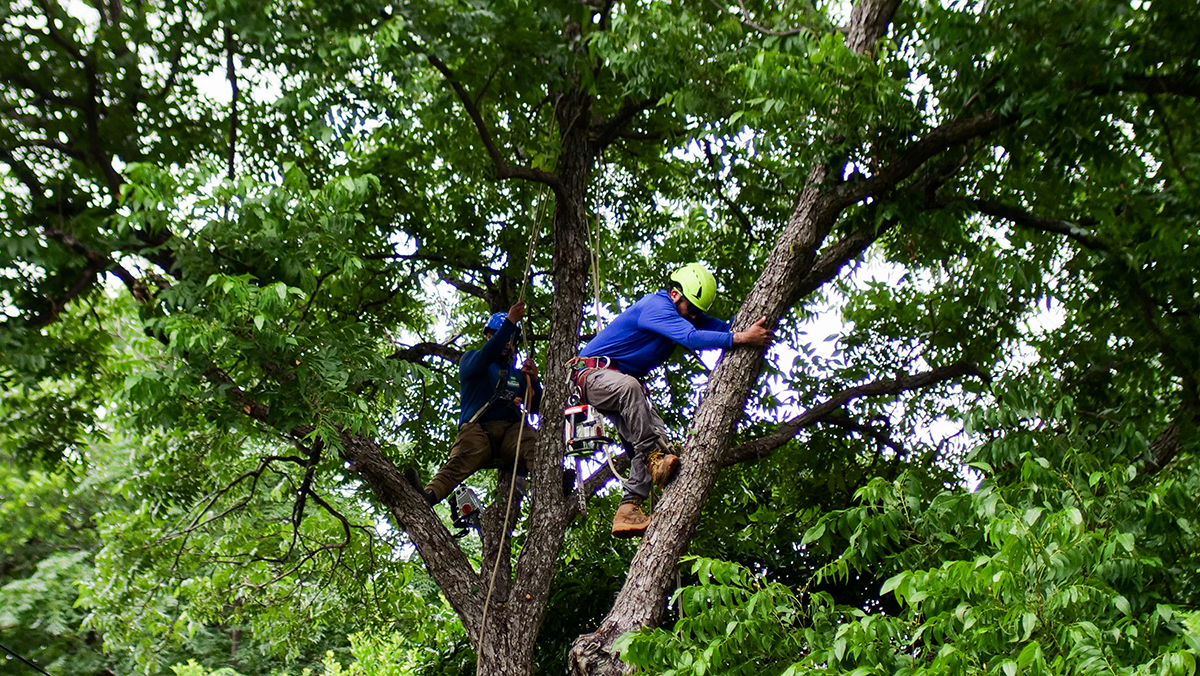
Trees provide shade, beauty and long-term value, but they rely on proper care to stay healthy and safe. One of the most important aspects of tree maintenance is knowing when to prune. In Texas, where climate conditions and tree species vary widely, timing matters.
Pruning at the right time supports strong structure, reduces stress, and helps prevent disease.
Understanding the Growth Cycles of Trees
Trees follow natural growth cycles that affect how they respond to pruning. Most trees actively grow during spring and summer, using their leaves to make and store energy. During late fall and winter many trees enter dormancy, when growth slows and energy use is reduced.
For homeowners, this matters because pruning during dormancy generally causes less stress for the tree. It also makes branch structure easier to see on deciduous trees, which helps identify dead, damaged, or poorly placed limbs.
Climate Considerations: Texas’s Unique Conditions
Texas spans several climate zones, from humid regions in the east to drier areas in the west. These differences can influence the best time to prune.
In much of the state, mild winters provide a good window for dormant-season pruning. In coastal or southern areas, higher humidity and longer growing seasons may require more careful timing. Matching pruning practices to local conditions helps trees recover more effectively and remain resilient.
Common Trees in Texas
Different tree species respond differently to pruning, making identification an important first step. Common Texas landscape trees include live oaks, red oaks, white oaks, elms, pecans, junipers, bald cypress and ash.
Some species – especially oaks – require special timing to reduce disease risk, specifically oak wilt. Knowing what trees are on your property allows pruning decisions to support natural form, tree health, and long-term performance.
Best Practices for Pruning Trees in Texas
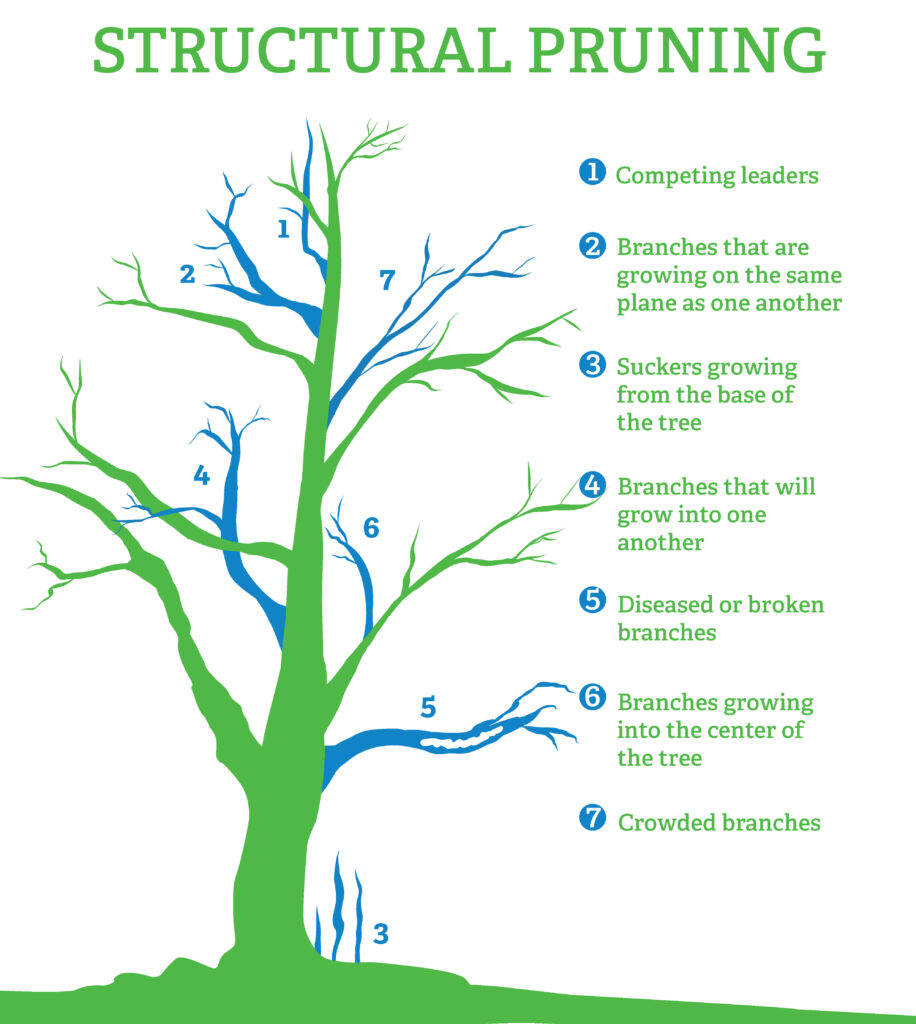
Once timing is established, proper technique is essential. Pruning should focus on health and structural integrity, not size control.
Pruning should be conservative; as a general guideline, avoid removing more than 25% of the live canopy in a single pruning cycle. This threshold is not universal and may vary based on tree species, age, health, and site conditions. Stressed, mature, or slow growing trees typically require lighter pruning to reduce the risk of decline.
Cuts should be made just outside the branch collar to support natural wound closure. Topping and excessive reduction are not recommended, as they compromise structure, increase maintenance needs, and reduce tree longevity. Most homeowners should limit pruning to small, accessible branches and rely on qualified professionals for larger or high-risk work. Visit the Texas Tree Surgeons homepage for expert guidance and services.
Preventing Common Tree Problems
Proper pruning plays an important role in preventing common tree problems. Removing dead or damaged branches can reduce the spread of pests and disease while improving airflow and light penetration throughout the canopy.
Thoughtful pruning also helps identify structural concerns early, allowing issues to be addressed before they become safety risks. Healthy, well‑maintained trees are better able to withstand heat, drought, and storms common in Texas.
Working With Nature for Long-Term Tree Health
Pruning in alignment with a tree’s natural growth cycle supports both health and appearance. When timing, technique, climate, and tree species are considered together, trees are more likely to remain resilient and perform well over the long term.
When pruning needs are uncertain – or when trees are large, high-value, or near structures – working with an ISA Certified Arborist helps ensure pruning is completed safely and in accordance with industry-recognized best practices.

At Texas Tree Surgeons we love trees. Understanding how tree trimming in North Texas varies by season will safeguard your trees. Adapting your trimming schedule based on seasonal needs will contribute significantly to their well-being and longevity.
 PREV BLOG
Tree Triming
View Photos of our Highly Trained Crew's Getting the Job Done

HIGHLY SKILLED CLIMBERS
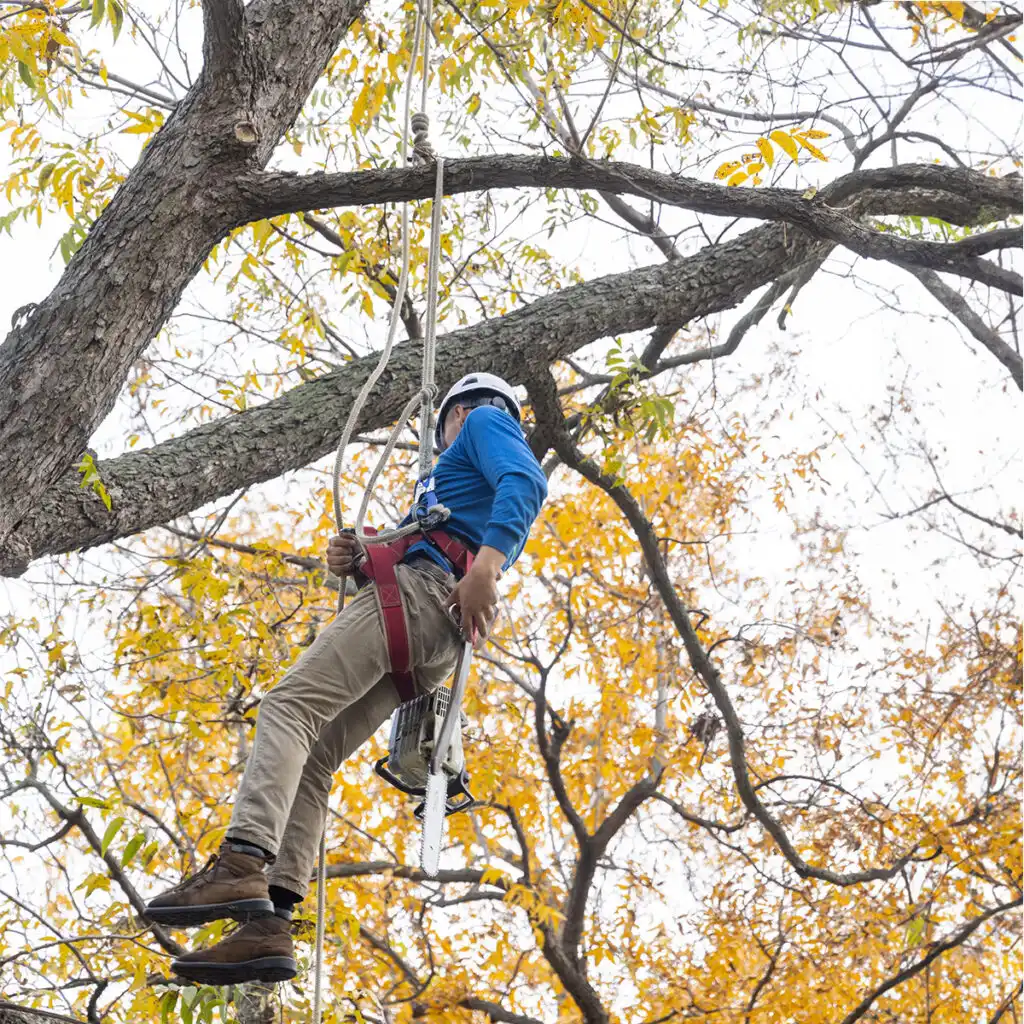
Our crews are comprised of individuals with different areas of expertise. Our highly skilled climbers use several types of PPE to keep them safe while in the canopies of the trees.

INSURED AND BONDED
Our crews work together to come up with the best plan to safely remove trees from a site. All of our employees train under a Certified Arborist to ensure best practices are always followed.

CLIMBING LINE & DRT
Safety for our climbers and your property is important to us at Texas Tree Surgeons. Our climbers use climbing line (specially designed rope) and use DRT (Double Rope Technique) to help them move safely within the tree canopy.

ARBORIST AND CREW WORKING TOGETHER
We hire only the most experienced climbers to trim trees, and all our employees train under a ISA Certified Arborist.

BEST TIME TO TRIM
Best practice is to trim certain trees during dormant periods, making fall and winter generally the best time. To learn more about best practices for when you should trim your tree click here.
TCIA & ISA GUIDELINES
We strictly adhere to TCIA & ISA guidelines in order to ensure everything we do is safe and in the best interest of your trees. By getting your tree assessed by our team of ISA certified arborists and trimmed by one of our skilled crews is the best way to ensure that your tree lives a long and healthy life.

PROTECTING PROPERTY FROM DAMAGE
Using climbing line to secure branches while trimming is important to keep your property and climbers safe. They are able to control the branches descent and place it gently onto the ground below.

SMALL SPACE WORK
Trimming and removing trees in small spaces takes extra time and extra care. Each piece must be cut and lowered with exact precision to avoid damage to property.

TYING OFF LIMBS FOR SAFETY
When trimming trees over structures, larger limbs need to be tied off so they do not damage the roof or the structure itself.

CRAPE MYRTLE TRIMMING
Crape Myrtles are beautiful and hardy trees when cared for properly; topping Crape Myrtles is a bad practice and not recommended.
SAFETY FIRST
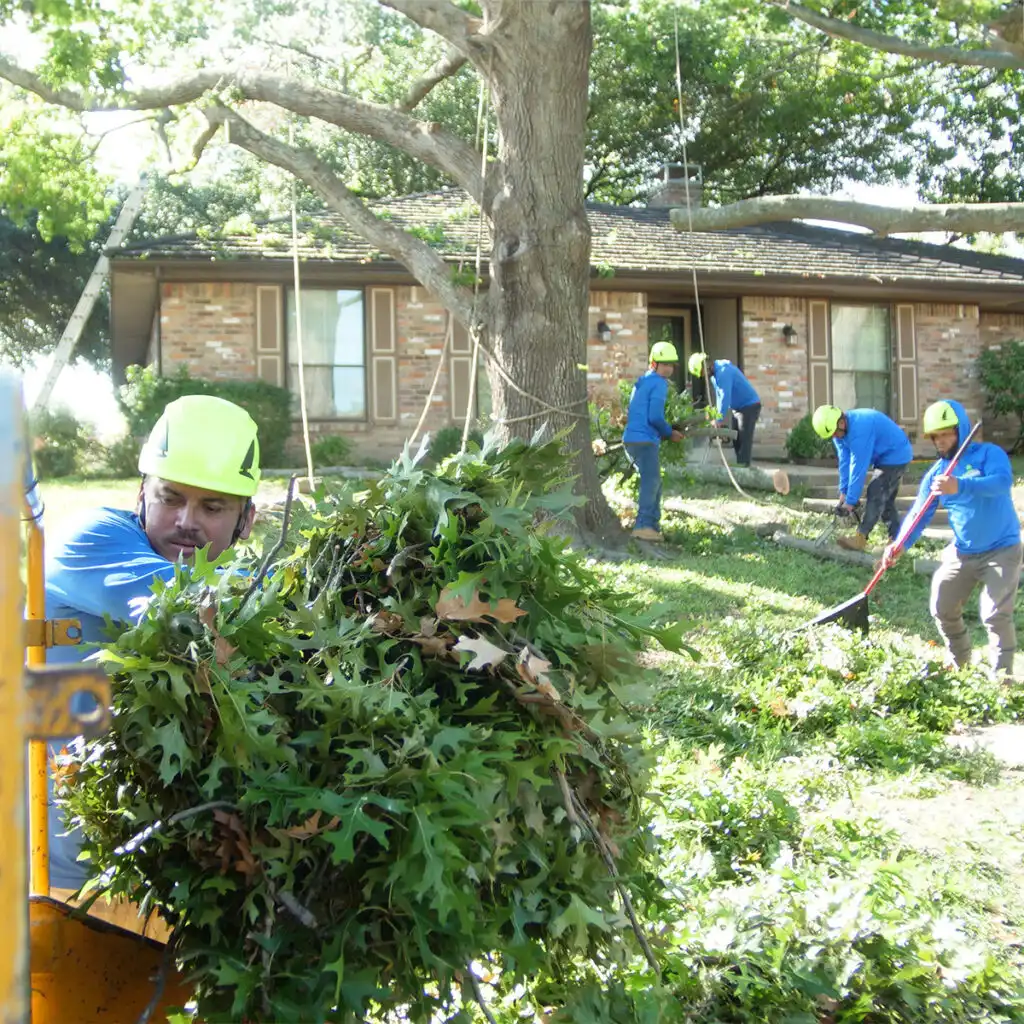
To ensure a safe work environment groundsmen will clear excess debris intermittently while tree trimming or removal takes place. Clearing the site as the tree is trimmed also ensures jobs are done in a timely manner.

THE RIGHT-SIZED CREW FOR EVERY JOB
We work with crews of different sizes to make sure that every job is done safely, quickly, and efficiently.

TREE TRIMMING
Our experienced climbers safely climb into the tree canopies to properly trim branches.

ATTENTION TO DETAIL
Our goal when we leave a job site is to leave it looking better than how we found it. That means picking up any debris that were created when trimming or removing a tree.

FULL CLEAN-UP
To ensure a job is completed quickly groundsmen will haul away brush intermittently while trimming or removal happens to keep the site clear and safe to move around. Groundsmen will chip the material on-site as needed to make sure all debris is collected and removed at the end of the job.

COMPLETE DEBRIS REMOVAL
At Texas Tree Surgeons we include debris haul off with all of our trim and removals. If you would like any of the wood left on site for your personal use (e.g. firewood) just let us know, we are happy to help.
Related Blogs
Similar blogs related to this topic

Your Guide for Pecan Trees in North Texas
Pecan trees are about as Texan as it gets—long-lived, generous, and a little particular about how they’re treated. With the right approach, they provide both dependable shade and a seasonal harvest. Not a bad return…
Read more

Why is Tree Topping Harmful?
It may seem like a quick fix for an overgrown tree, but topping often creates long-term problems that outweigh any short-term results. Understanding why tree topping is detrimental – and what to do instead –…
Read more

Is it a Tree or a Shrub?
An Arborist’s Perspective From an arborist’s point of view, the difference between a tree and a shrub isn’t just about labels – it’s about how a woody plant grows, functions, and supports the surrounding environment…
Read more